
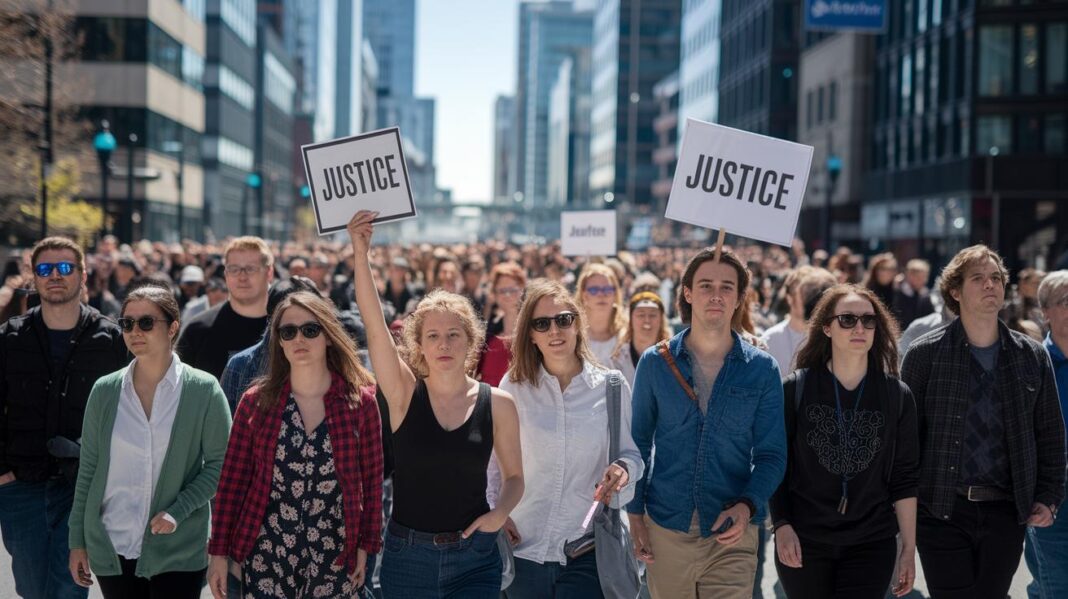
Ever wonder if our legal system is truly fair? Laws and rights protect us by keeping bias and discrimination in check. They set clear rules that defend citizens and immigrants while giving a voice to those often overlooked. Social justice lawyers and community groups work together to fight unfair treatment and push for change. This article explains how our laws help create equality through legal battles, courtroom reforms, and public efforts to build a fairer society.
Law’s Influence and Response in Social Justice
Laws and constitutional rights protect people from inequality and discrimination. They set clear rules for citizens and immigrants. For example, the Constitution spells out which groups are protected under state human rights laws so that everyone is treated fairly. In many communities, people rely on these rules to fight unfair practices. This system lets the public know that fairness is a key part of building a just society.
Social justice lawyers help those who face bias in housing, jobs, and policing. They use the law to challenge discrimination directly. These lawyers stand up for people affected by long-standing bias and offer legal help when society does not protect human dignity. For instance, legal representatives step in when local leaders treat people unfairly, turning individual issues into steps toward better policies.
Grassroots groups and civic action can change the law. Activist movements unite the public to urge lawmakers to improve rights and fairness. Community organizations hold events like "know your rights" sessions to empower people and influence decision-makers. These efforts show how public pressure can lead to changes in the law, making the legal system better reflect our growing demand for justice and equity.
Judicial Reform in Social Justice and Law
Bail and sentencing reforms are now in the spotlight as a way to fix deep unfairness in our justice system. In 2020, efforts to change bail rules and, in 2018, revised sentencing guidelines replaced standard punishments with options that fit each person’s situation. For instance, removing fixed minimum sentences in drug cases helped judges better balance punishment with chances for rehabilitation.
Changes in the penal system are also addressing heavy fines and fees that often hurt low-income communities. Activists and lawmakers work together to challenge rules that punish poverty. Their efforts are opening doors to fairer alternatives and helping create legal practices that do not add extra burden on those already struggling.
New oversight measures in courts now make sure decisions are fair and backed by data. Many areas use facts and figures to reduce racial differences in sentencing. They also improve access to legal help by expanding legal aid clinics. This shift supports a more balanced system where judges follow frameworks designed to deliver fair outcomes for everyone.
Landmark Social Justice Cases Shaping Law
In 2022, a court allowed new claims after detainees at Adelanto Detention Center were exposed to harmful pesticides. The case argued that toxic chemicals put lives at risk and violated detainees' right to a safe environment under the Eighth Amendment. Notably, the court ruled that even people in detention deserve protection from toxic exposure. This decision shows that the law must defend the basic health rights of everyone, especially the most vulnerable.
In 2021, the ACLU secured a settlement that ended an unfair citation system in Lancaster. The case proved that low-income residents were hurt by enforcement practices that imposed unjust fines. This outcome highlights how the law can challenge biased systems and prompt changes that affect everyday lives.
In 2023, a sheriff’s motion was denied in a civil rights case over search and seizure practices. The ruling supported Fourth Amendment rights and protected citizens from intrusive searches. Notably, the decision serves as a reminder that every person deserves privacy and should be shielded from law enforcement overreach.
| Case Name | Year | Outcome |
|---|---|---|
| Adelanto Pesticide Harm | 2022 | New detainee health claims allowed |
| Lancaster Citation Settlement | 2021 | Unconstitutional system struck down |
| Search & Seizure Suit | 2023 | Fourth Amendment upheld |
Academic Platforms for Social Justice and Law

Law schools now offer special tracks that combine human rights with economic justice studies. After the 2021 George Floyd protests, many programs began focusing on civil and economic rights while training lawyers to serve the public good. These schools team up with advocacy groups to create courses that fight discrimination and promote fairness. One program even uses real case studies to show how biased policies hurt marginalized communities.
Legal clinics give students hands-on experience with real issues like immigration detention and police misconduct. In these clinics, students work on cases that test the laws meant to protect basic rights. This practical work builds their skills and strengthens legal aid efforts. It also shows that learning law means actively protecting human dignity.
Researchers in human rights and legal theory are helping change policies through studies and projects. Professors and students work together on research that guides changes in both laws and court practices. This work deepens the understanding of legal fairness and prepares a diverse group of advocates ready to build a fairer future.
Grassroots Mobilization and Legal Advocacy in Social Justice and Law
The Social Justice Law Foundation uses legal cases alongside community action to fight discrimination. They bring together teachers, local organizers, and affected groups to build legal paths for those treated unfairly at school, at home, or when voting. Local leaders learn how to challenge bad policies with community legal help and public legal outreach methods. Their work with many partners shows how community law efforts can make the law work for everyone.
- Know your rights workshops
- Free legal help clinics
- Local policy meetings
- Citizen-run data checks
- Group-led legal cases
These actions help people learn their rights and create the support systems needed for legal aid. They give regular folks the tools to join legal battles that bring change. As a result, community legal work leads to better legal support and wins in local government. This team-based method not only fixes short-term problems but also builds lasting legal support and public trust.
Obstacles and Prospects in Social Justice and Law

Limited resources and shifting politics have weakened the enforcement of anti-discrimination laws. Many agencies face budget cuts and changes in leadership that make it hard to protect people’s rights. Meanwhile, rising digital surveillance brings new challenges as it tracks public behavior and can invade privacy. For example, digital monitoring may lead to constant tracking. Imagine walking in a neighborhood where every step is recorded. These gaps show that protecting rights takes constant attention.
Restorative justice models offer a hopeful path forward in today’s legal world. New digital platforms are being built to provide legal help when old systems fall short. Experts from different fields are also working to reduce bias in digital tools to create fairer outcomes. In short, this vision calls for new legal solutions that mix community efforts with modern technology and smart policies.
Final Words
In the action, the blog traced how legal tools protect civil rights and fairness. It detailed how statutes and case law set standards for social justice and law. Social justice lawyers and community groups have bolstered equity in legal systems and driven reforms. Academic platforms and grassroots efforts expand access to fair legal resources. These efforts combine to form a balanced legal framework that empowers individuals and communities. The momentum behind reforms signals a brighter, more just future.
FAQ
What is a social justice and law degree?
The social justice and law degree combines legal studies with advocacy training, preparing graduates to address inequality and bias through both legal frameworks and community-focused strategies.
What are social justice and law jobs?
The social justice and law jobs involve legal roles that focus on civil rights, public interest, and policy reform, often working within government, non-profit organizations, and community groups.
What is the social justice lawyer salary?
The social justice lawyer salary varies by location, experience, and employer. Many start at modest wage levels in public service and non-profit sectors but can progress to competitive rates over time.
What is a Social Justice Legal Foundation?
The Social Justice Legal Foundation supports efforts to create fair legal systems by combining litigation with community engagement, advocating for policy reform and defending civil rights.
What are social justice law schools?
The social justice law schools offer curricula that focus on civil rights, legal advocacy, and public interest law, equipping students with skills to pursue careers in reform and community representation.
What does a social justice lawyer do?
The social justice lawyer uses legal skills to defend marginalized groups, challenge discriminatory practices, and work on cases that uphold civil liberties and constitutional protections.
What are human rights law schools?
The human rights law schools specialize in training students on protecting civil liberties and combating inequality through legal methods, with a strong emphasis on advocacy and policy reform.
How can one participate in social justice?
Participation in social justice involves joining community advocacy, volunteering with legal aid or civic groups, attending public forums, and taking part in efforts that promote equality and fair treatment.
What is social justice law?
The social justice law refers to legal principles and practices designed to prevent discrimination and inequality by enforcing civil rights and ensuring fairness in legal processes.
What are the 5 principles of social justice?
The five principles of social justice generally include fairness, equality, respect, inclusion, and participation in decision-making processes aimed at creating balanced and equitable societies.
What is the importance of law and social justice?
The importance of law and social justice lies in protecting citizens against discrimination and bias, ensuring that rights are respected and that legal standards promote fairness and equal treatment.
What are the 4 types of social justice?
The four types of social justice typically include distributive justice (fair distribution of resources), procedural justice (fair legal processes), retributive justice (fair punishment), and restorative justice (repairing harms and fostering reconciliation).