
Can shared rules help countries work together on big challenges? Global governance creates a clear framework with institutions (groups that manage rules) and guidelines so nations can team up on issues such as climate change, health crises, and natural disasters. In our connected world, one country working alone often does not go far enough when risks affect many people. Some say current methods cannot keep up with rapid changes, yet strong cooperation remains our best path forward. This post explains how global governance not only helps solve problems together but also paves the way to a safer, more sustainable future.
Understanding Global Governance and Its Importance
Global governance is a set of rules, institutions, and guidelines that help countries tackle problems that cross borders. It plays a key role in dealing with issues like climate change, nuclear risks, health pandemics, environmental collapse, and natural disasters. This framework lets nations make group decisions and work together on challenges that no single country can fix alone.
Today, our world is tightly connected. National efforts often aren't enough to solve challenges that affect the whole planet. Countries need to set clear standards and rules to work together effectively. This is done through groups like:
- United Nations
- World Trade Organization
- World Health Organization
- International Civil Aviation Organization
- International Monetary Fund
- World Bank
Some critics say that today's global governance does not keep up with fast-growing and complex risks. With problems becoming more linked and urgent, older methods sometimes fall short. Reform is needed. Leaders must work together to update these systems so they can respond quickly to new challenges and meet varied global needs. The more our lives connect, the more important strong global governance becomes for a safe and sustainable future.
Historical Evolution of Global Governance Mechanisms
After World War I, global leaders tried working together. They formed the League of Nations to help stop future wars. The League set early guidelines for countries to talk and agree on rules, even though it had little power and few members.
In 1945, after World War II, the United Nations was created. This new group brought nations together to set clear rules and diplomatic standards. The UN has since become a hub for working on security, economic stability, and human welfare.
During the Cold War, the global system had to adjust. Countries balanced alliances and rivalries while forming new treaties that respected different political views. These shifts helped build the treaty rules we see today, strengthening diplomacy and crisis response.
After 1990, governing efforts grew to include environmental and human rights issues. Nations began addressing climate change, biodiversity loss, and other cross-border challenges. Early efforts in trade and maritime rules have evolved into a broad set of norms that shape today's global cooperation.
global governance empowers global cooperation
Global governance builds trust and brings countries together through trusted groups. Intergovernmental organizations set simple rules and manage big issues like security, trade, health, and finance. They create clear guidelines that keep things stable, help in emergencies, and make sure nations work well with one another. When a crisis hits, these groups follow expert advice that considers both a nation's needs and the needs of all. Their work helps create clear decision-making and opens ways for countries to share resources when problems arise.
| Institution | Primary Role | Notable Mechanisms |
|---|---|---|
| United Nations | Security and development | Peacekeeping, humanitarian assistance, multilateral agreements |
| World Trade Organization | Trade regulation | Dispute settlement, trade rule enforcement |
| World Health Organization | Health emergencies | Emergency protocols, treatment guidelines |
| International Monetary Fund | Financial stability | Fiscal monitoring, economic surveillance |
Each organization carries out its own duty but they also help each other. The UN works for peace and growth. The WTO sets fair trade rules. The WHO manages health crises. The IMF watches over global money matters. Together, by following clear rules and procedures, they build a system that manages risks, keeps nations honest, and makes decision-making open. In a world where countries depend on each other, this strong structure makes global cooperation real by linking the efforts of many nations into one unified plan.
Decision-Making Processes and Policy Frameworks in Global Governance
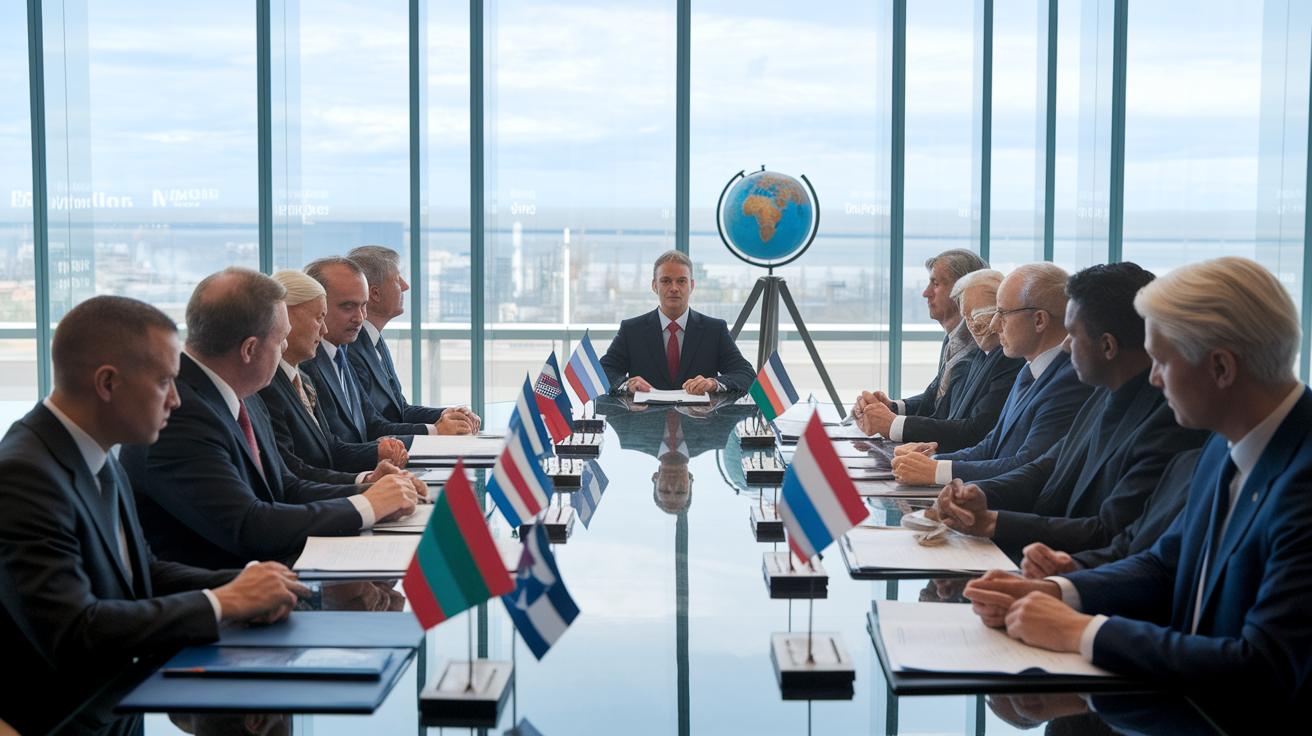
In meetings for multilateral treaties, state reps come together to work on deals that tackle security, trade, and health issues. They build plans to guide rules such as those for the Security Council, WTO dispute services, and WHO emergency actions. These talks follow clear guidelines and step-by-step formats so countries can agree on the rules and goals.
Voting systems and consensus models are key to shaping global deals. Leaders use well-known voting rules to balance power and reach common goals. Often, a policy only passes when everyone important agrees. Expert committees add value by sharing evidence and balancing national interests. This system helps smooth over differences and build a united approach.
Diplomacy grows stronger when civil society and experts join in policy-making. Leaders now ask nonstate actors for fresh ideas and real-world data. Input from scholars, tech experts, and civic groups works with state views, making decisions clearer and more informed. This mix means that policies are richer and not just based on government views.
Contemporary Challenges and Critiques of Global Governance
Global governance structures often fall short when facing fast-moving crises. Problems like pandemics, extreme weather, and the threat of weapons of mass destruction highlight the shortcomings of old ways of cooperating. Older systems tend to stick to fixed rules and central decision-making. This approach can slow responses and hurt transparency during emergencies.
Different sectors show these issues clearly. In civil aviation, for example, rising use of drones and autonomous systems pushes outdated rules past their breaking point. Experts call for the International Civil Aviation Organization (ICAO) to update these rules so they can handle new low-altitude risks and airspace challenges. Similarly, digital rights are at risk as practices like digital repression lead to surveillance and sudden internet shutdowns, which can erase important records used in legal and transitional justice processes.
Security is another area under strain. NATO allies now face uncertainties in Europe, unsure of defense commitments and support for Ukraine. This has made it clear that current oversight methods need a fresh review. The growing challenges, from both traditional and new threats, stress the need to reform global governance to boost trust and improve responses in our interconnected world.
Innovations and Future Directions in Global Governance

Countries are teaming up in new ways to tackle global challenges. They are creating systems that mix modern technology with clear, fair practices to build a future that can adapt to change.
Experts now call for digital public systems built on truth and evidence. These systems make sure records are kept safe and help leaders make good decisions even when political conditions shift. For example, specialists highlight the need for strong digital tools that protect data and boost transparency.
New frameworks for managing artificial intelligence are emerging. These models promote greener, carbon-conscious operations by pairing smart hardware with sustainable methods. The AI Global Governance 3rd Edition shows how technology can grow responsibly while caring for the environment.
Collaborative network models offer another bright path forward. Programs like Global Peace Security and Strategic Studies join different groups to face common risks. By combining their strengths, nations and organizations can build governance systems that are both agile and inclusive.
Case Studies of Global Governance in Action
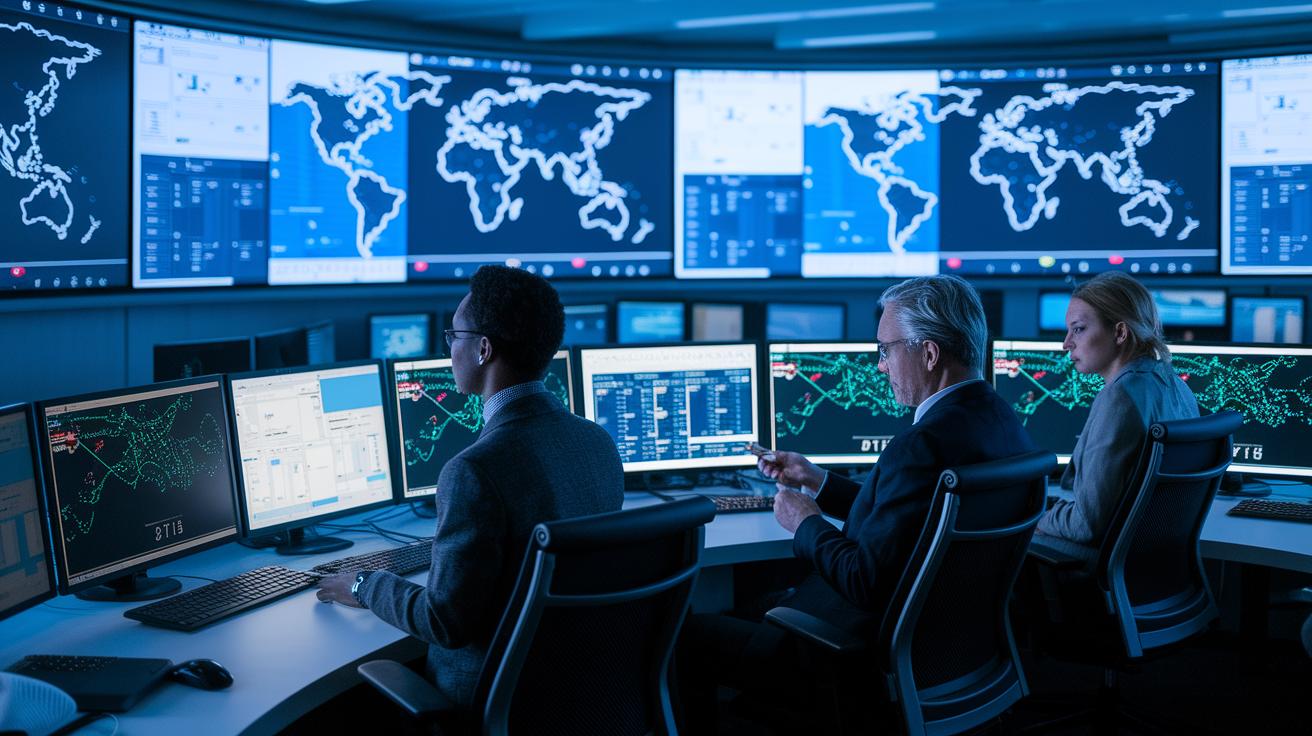
Civil aviation is making big changes to meet today’s sky challenges. Officials at the International Civil Aviation Organization (ICAO) are quickly addressing new risks from low-flying drones and self-piloting flight systems. They have updated procedures and improved monitoring to protect our shared airspace. This move is a real-world example of how global rules must evolve as technology advances, with countries working together to keep our skies safe.
EU-Ukrainian academic ties are now driving cross-border innovation. Joint projects between the European Union and Ukraine are modernizing research and teaching. These initiatives help students and staff move easily between institutions while pooling knowledge to solve local issues. By bringing higher education into the mix, this collaboration shows how learning can build peace and boost community growth.
At the Hague Summit, NATO allies reinforced their commitment to defense amid current uncertainties. This case study highlights how coordinated military and political efforts keep regions stable. Events like the November 2025 cyber roundtable and ongoing AI policy discussions underline a new approach where fast tech adoption and careful policy tweaks are key to global security.
Final Words
In the action, we explored how global governance factors into international cooperation against major risks. We reviewed its evolution from early institutions to advanced systems addressing climate change, pandemics, and security challenges.
Key institutions like the United Nations, WTO, WHO, and IMF were spotlighted. The blog also outlined reforms and innovations aimed at boosting decision-making processes. These insights offer a clearer path ahead and help inform timely responses to shifting global dynamics.
FAQ
What are some examples of global governance?
Global governance examples include institutions such as the United Nations, World Trade Organization, World Health Organization, International Monetary Fund, World Bank, and the International Civil Aviation Organization that work together on international issues.
What is global governance in simple words and what does it mean?
Global governance means a system of institutions, rules, and practices that help different countries work together and solve challenges that cross national borders.
Where can I find global governance PDF and PPT resources?
Global governance PDFs and PPTs are available from academic institutions, international organizations, and specialized online libraries that offer detailed insights and visual summaries for research and policy analysis.
What is the importance of global governance?
The importance of global governance lies in its role to coordinate responses to issues like pandemics, climate change, and economic instability by uniting different countries to take collective action.
Who are the actors in global governance?
Actors in global governance include national governments, international organizations, non-governmental organizations, and private sector entities that all contribute to solving global challenges.
What are the five types of global governance?
The five types of global governance typically include diplomatic, economic, security, environmental, and social systems that structure how countries and organizations collaborate on various global issues.
What does a global governance report detail?
A global governance report details institutional frameworks, provides policy analysis, and offers recommendations for enhancing international cooperation on topics such as trade, health care, and security issues.
What are the three elements of global governance?
The three elements of global governance include institutions, established rules and norms, and the cooperative processes that allow countries to make collective decisions on shared concerns.
What is the primary goal of global governance?
The primary goal of global governance is to align policies and actions among nations, enabling them to address cross-border challenges effectively for the benefit of global stability and well-being.