

Could a small shift in numbers hide big changes in our democracy? Voter turnout dropped to 64% in 2024 from 66% in 2020, although this rate is still high compared to earlier decades. Local campaigns and focused voter registration efforts helped drive these numbers. This update breaks down key trends and regional patterns to show why every vote matters. Read on to see how these figures might hint at future election results.
National Turnout Update: 2024 vs. 2020 Overview
In 2020, 66% of eligible voters cast their ballots. That rate was the highest seen since 1908. In 2024, the turnout slipped slightly to 64%, a level that matches the 1960 figure for the second best in a hundred years.
Looking at recent history, only 41% of eligible citizens voted in all three national elections, while 26% skipped voting every time. This contrast highlights a surprising fact: even though many expected record numbers in 2020, the 66% turnout set a rare benchmark.
Analysts say the boost in voter numbers can be linked to stronger civic engagement and focused get-out-the-vote campaigns during presidential elections. Even a small change from 64% to 66% shows how national events and shifting political climates can encourage more people to vote.
The figures also remind us that even in election years with high engagement, many citizens still do not vote. This situation underlines the importance of voter registration and outreach programs as we look ahead to future elections.
State-Level Voter Turnout Update and Regional Patterns
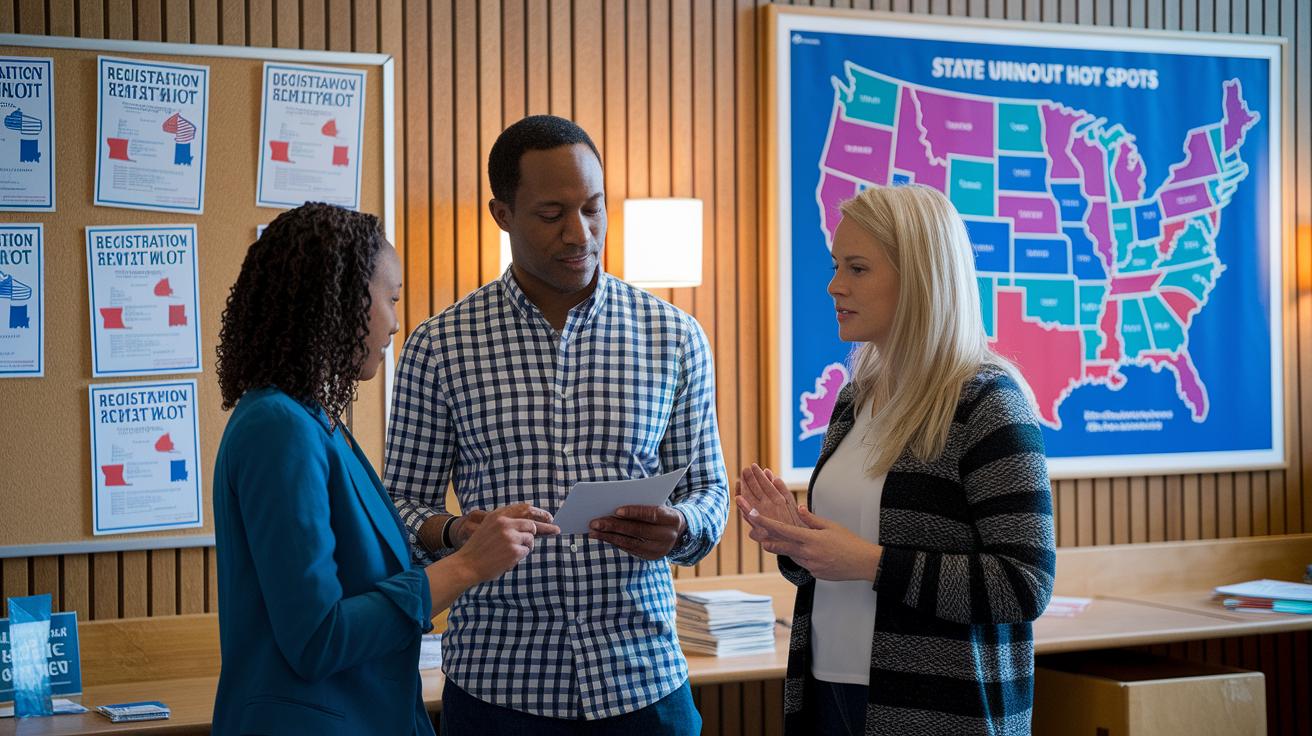
The 2024 election showed clear state-by-state differences. In Minnesota, Oregon, and Washington, DC, more than 75% of voters cast their ballots. By contrast, states like Arkansas, Texas, and Louisiana reached some of the lowest turnout levels. These gaps are tied to local registration efforts. For example, Minnesota's record shows that high local engagement can push turnout past 75%.
Local election updates show that active voter registration and community programs boost turnout. When officials and local groups work hard to register voters and update records, more people vote on election day. On the other hand, regions with fewer registration drives tend to see lower turnout. This connection between voter lists and participation is clear.
Among the top 10 states for voter turnout, seven supported Harris. This fact points to key regional trends. Strong registration pushes help drive impressive results, while limited outreach often leads to lower numbers.
- High turnout: Minnesota, Oregon, Washington, DC
- Low turnout: Arkansas, Texas, Louisiana
- Political trends: Seven of the top 10 states backed Harris
The data show that increasing voter registration is one way to boost participation in future elections.
Demographic Voter Turnout Update: Age and Race Trends
Data from 1978 to 2024 show clear differences in how people vote based on their age. Older voters cast ballots much more regularly than younger ones. For example, people aged 60 and over vote at much higher rates than those under 30. In many local elections, seniors sometimes vote almost twice as much as young voters. This big gap shows that generational differences play a strong role in election results.
Age Group Turnout Trends
Studies reveal that voters over 60 are key to final vote counts. In some counties, over 80% of older voters show up, while less than 40% of those under 30 do. This means that campaigns looking to boost youth voting must work harder to overcome low interest and other voting challenges. If more young people vote, it could shift the balance in national races.
Race/Ethnicity Turnout Trends
White voters still lead in turnout during presidential elections compared to minority groups. However, 2024 data show a drop in voter participation across several racial and ethnic groups. In some regions, even groups with traditionally high turnout have seen small declines. For example, while white voters continue to vote at high rates, Black, Hispanic, and other minority voters have dropped significantly. Experts say these changes may impact results in key swing states where diverse votes count.
- Younger voters show a large gap in turnout compared to seniors.
- White populations keep high voting rates, but minority groups are voting less.
- Efforts to reach young and minority voters are key for future elections.
Updated Behavior Patterns and Party Impact on Turnout

New and Returning Voters’ Turnout Rates
In the 2024 election, new voters and repeat voters did not vote the same way. Many new voters and those who returned helped Trump win by about 54% to 42%. When voters who were too young in 2020 are removed from the count, Trump gets 52% support while his opponent garners 45%. This means first-time voters give a boost, but loyal voters remain a strong force.
Studies show that high turnout by repeat voters often shapes the overall results. For example, 89% of Trump supporters from 2020 voted again in 2024, compared with 85% of Biden’s previous supporters. This suggests that established voting habits hold steady even when campaign messages change. Voters who are already active tend to stick with their party, especially in closely fought races.
- First-time voters: 54% favored Trump
- Returning voters: High turnout for Trump
- Excluding young voters: Trump at 52%, opponent at 45%
Party Support Shifts Among Key Demographics
Among voters who usually do not vote, 44% said they back Trump while 40% chose Harris. This shows the need to focus on getting these voters to the polls. Hispanic voter turnout also shifted. About 86% of Hispanic Trump supporters voted, compared with 77% of Hispanic Biden backers. These figures point to how targeted efforts in specific communities can influence tight races. Analysts are watching these trends to see how they may change overall support.
Voter Turnout Update on Mobilization and Nonvoter Profiles
Eligible nonvoters in 2024 are mostly young, earn less, are less likely to be White, and have lower education levels. Research shows that 26% of eligible citizens did not vote in the last three national elections. These facts suggest that money troubles, less schooling, and other factors play a big role in people choosing not to vote.
Campaigns looking to bring more voters are changing their tactics to reach these groups. One message read, "Imagine a community where every young person gets personalized reminders to register and vote." Such efforts are meant to help young people and others who may lack time or money, making it easier for them to participate.
Key traits of these nonvoters include:
- Young age, with busy work or family lives.
- Lower family incomes that limit access to information and transportation.
- Lower education levels, which can make the voting process seem confusing.
- A smaller proportion of non-White people compared to those who vote.
Various programs are now tackling these problems head on. They use local door-to-door visits and digital campaigns to help bring nonvoters into the voting process and encourage them to register.
Voter Turnout Update: Promising Election Trends

Campaign teams are using digital tools to reach younger, less-affluent, and minority voters. In San Diego, one campaign’s live texting system boosted young voter registration by 12%. A mid-sized campaign in the Midwest also saw a 12% jump after launching a digital plan focused on first-time voters.
Campaign organizers say mobile apps and digital feedback channels now play a big role in strategy. One manager said, "Using algorithms to study voter interest helps us change our outreach right away." This shows how digital tools give local teams clear, fast data to guide their work.
Key digital tactics include:
- Real-time voter feedback apps that capture data instantly
- Mobile messaging campaigns targeting local issues
- Online registration drives paired with neighborhood events
| Strategy | Voter Turnout Increase |
|---|---|
| Real-time Feedback Apps | 12% rise |
| Mobile Messaging | 10% rise |
| Neighborhood Canvassing | 8% rise |
Turnout Forecast and Improvement Strategies in Voter Turnout Update
Forecast models now predict that voter turnout could increase by nearly 15% in upcoming elections. Recent data from voter analysis firms shows that tools like AI-powered outreach and blockchain registration could better target eligible voters. One forecast said turnout might jump from 61% to 70% if real-time voter verification is used.
New rules are set to modernize voter registration by creating standard digital records and secure ways to check identities. These changes could cut errors and reduce delays at polling places. Officials are reviewing tools like biometric checks (using unique physical features) and automated eligibility checks, which could simplify registration more than ever before.
Key forward-looking strategies include:
- AI-driven outreach that uses local data to find low-turnout areas
- Blockchain systems that keep voter records updated and secure
- Biometric tools that confirm voter identity instantly
- New rules to standardize digital records and speed up administrative processes
Final Words
In the action, this article covered national and state turnout trends, the differences in age and race voting patterns, and party support shifts. It examined nonvoter profiles and highlighted strategies that influence engagement. The discussion on behavior patterns and forecast offers clear insights for anyone watching political trends. This voter turnout update shows how data can guide better decisions and drive actions to boost participation. Data-backed insights like these keep informing progress and inspire hope for an even more active future.
FAQ
Frequently Asked Questions
What are voter turnout statistics and how do they vary by year?
Voter turnout statistics show the percentage of eligible voters casting ballots. Recent years saw a 66% turnout in 2020 and 64% in 2024, reflecting changes in voter engagement.
What was the highest voter turnout in U.S. history and which presidential election set that record?
The 2020 presidential election achieved a record 66% turnout, marking the highest rate since 1908. In contrast, the 2024 election recorded a 64% turnout, ranking among the top performances.
What is the U.S. voter turnout percentage in recent elections?
Recent U.S. elections feature turnout percentages around 64% to 66%, with presidential contests drawing significantly more voters than other types of elections.
How does voter turnout differ by country?
Voter turnout rates vary worldwide due to differences in electoral systems and registration rules. Many nations report distinct participation levels based on their national voting laws and public engagement practices.
How many registered voters are there in the United States?
Estimates indicate that hundreds of millions of citizens are registered to vote in the United States. Registration totals vary by state, influenced by local policies and outreach efforts.
How does voter turnout in presidential elections compare to other contests?
Presidential elections tend to draw more voters than midterm or local contests. Higher public interest in national races typically results in turnout rates nearing 64% to 66% in recent cycles.