

Climate challenges might spark breakthrough solutions. Adapting to climate change is about more than just surviving; it drives smart, future-ready progress. People around the world are finding new ways to protect neighborhoods from rising seas, fierce storms, and resource shortages.
Communities are using early warning systems (tools that alert people to danger), stronger buildings, and innovative ideas for water use and farming. These efforts not only keep people safe but also boost local economies.
In short, creative adaptation efforts are building stronger communities and preparing us for the uncertainties of tomorrow.
Actionable Climate Change Adaptation Strategies Across Sectors
Adaptation efforts aim to cut risks from extreme weather, rising seas, loss of wildlife, and shortages of water and food. Global programs like the Paris Agreement and sustainable development goals push us to build stronger communities. These efforts also touch on our economy, the environment, and social life. Governments and local groups mix quick fixes with long-planned projects. They upgrade infrastructure, restore natural areas, and act fast when emergencies hit. This approach works well with disaster risk methods like those in the Sendai Framework. Using clear policies, new adaptation tech, and updated infrastructure plans helps us meet today’s challenges and safeguard the future.
- Early warning systems and local alert networks
- Upgraded infrastructure that withstands climate change
- Projects to restore and protect ecosystems
- Farming practices that adapt to the climate
- Better water management and plans for droughts
- Social safety nets and new job opportunities
- Flexible governance and integrated policies
Regular monitoring and data-backed research keep these measures on track. New tools help decision-makers adjust plans quickly as risks change. This way, each sector stays ready, and our investments cut risks effectively.
Planning for long-term resilience shows clear economic benefits. Studies have found that for every $1 spent on adaptation, communities can see returns between 2:1 and 10:1. By taking action now, we build a future where safety, prosperity, and a healthy environment support each other.
Building Resilient Community Planning and Inclusive Adaptation

Local governments lead efforts to build strong communities. They work with residents to update emergency plans and ensure public spaces and essential services are ready for climate changes. This work creates safer neighborhoods and shows a clear commitment to climate change adaptation.
Capacity building means hands-on training, engaging community members, and checking regional risks. Local officials hold workshops to explain hazards and share ways to reduce danger. These sessions support SDG 13 (Sustainable Development Goal 13, which urges action on climate change) by building important skills in low-income areas, like those relying on rain-fed farming, and help create a more inclusive response.
Social programs spur lasting community action. Municipalities launch projects where underrepresented groups share local insights to shape planning. Initiatives such as municipal coastal protection not only boost safety but also strengthen community trust. This approach links local policies directly to practical improvements in climate resilience.
Ecosystem-Based Approaches and Nature-Based Protective Measures
Nature-based strategies help reduce climate risks while building stronger communities. These methods restore natural areas such as mangroves and wetlands that act as barriers against storms and floods. They protect coastal regions and help maintain a rich variety of plants and animals. Studies show that planned restoration projects can save up to 10 times their cost. By keeping these natural buffers intact, communities enjoy cleaner water, safer homes, and new homes for wildlife.
Using nature-based measures in farming and water management makes communities less vulnerable. Climate-smart farming uses drought-resistant crops and soil conservation to build resilient farms. Better water management, like restoring watersheds and improving irrigation, helps secure water during both dry spells and heavy rains. Local assessments guide these efforts to protect farms and local economies. Research shows that blending natural solutions with modern practices brings lasting benefits and boosts community confidence in facing climate challenges.
Innovative Adaptation Technologies and Infrastructure Renewal Planning

Communities are using new tech to get ready for climate risks. Experts say that spending close to $1.8 trillion by 2030 could bring benefits of up to $7.1 trillion through early warning systems, stronger buildings, and smart ideas for farming and water use. Cities are using smart water methods and careful urban plans to fight urban heat and strong storm surges. Local officials trust these new methods to keep people safe and lower future costs.
New ways to manage floods and nature-based defenses are now key tools in cutting the damage from disasters. These tech-based ideas are raising the bar for how towns prepare and renew their infrastructure, helping them stay ahead of climate changes.
| Technology/Approach | Sector | Key Benefits | Example Project |
|---|---|---|---|
| Early warning systems | Disaster risk reduction | Real-time alerts; lives saved | WWJP hazard network |
| Smart irrigation systems | Agriculture | 30% water savings; yield boost | PrecisionFarmer X trial |
| Green roofs and walls | Urban | Heat island mitigation; stormwater retention | Metropolis City pilot |
| Salt-marsh restoration | Coastal defense | Surge attenuation; habitat gain | Gulf Coast initiative |
Working together in planning and policy helps make these improvements a reality. By linking urban resilience with infrastructure updates, local governments can put in place changes that protect communities today and in the future.
Advancing Agricultural Practices for Resilience and Smart Water Management
Climate-smart agriculture uses special drought-resistant crops and improved dryland methods to help farmers deal with harsh weather. In one case, local growers switched to tougher seed varieties and better dryland techniques, and their yields improved. One farmer noted, "My yields went up even after long dry spells when I used drought-resistant seeds."
Smart water management uses precise irrigation and watershed restoration to make a difference. Sensors control water flow automatically so that crops get the right amount during dry times and avoid extra water during floods. A test in a semi-arid area showed that these sensors cut water waste by 20%. One expert said, "Precision irrigation is like a smart thermostat for water, it runs only when needed."
Adding these innovations to long-term plans builds a solid foundation for sustainable farming. Farms that use smart watering techniques along with resilient crops are finding more stability and better use of resources, which helps improve overall food security.
Coastal Protection Initiatives and Flood Risk Management
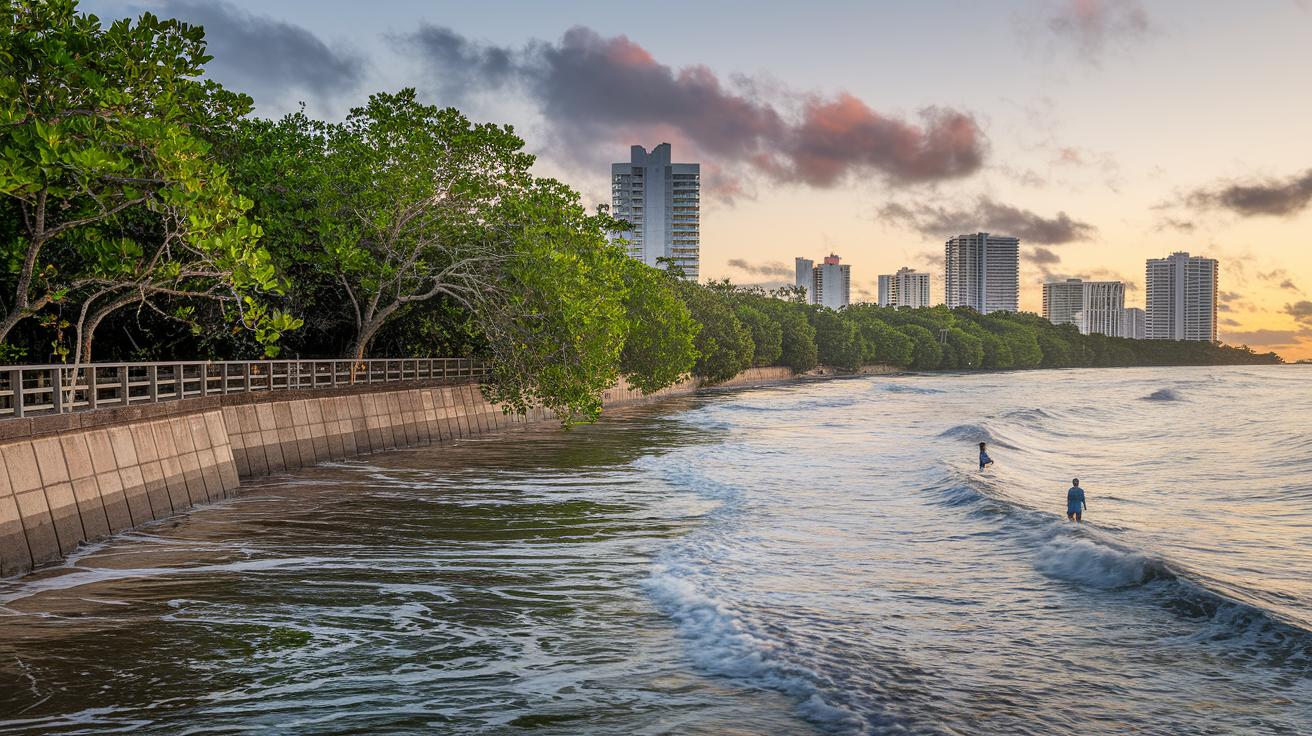
Engineered methods and natural solutions work together to protect our coasts and lower flood risks. Projects mix solid barriers like seawalls with natural features such as mangrove forests and salt marshes. These natural buffers cut down the force of storm surges and help store carbon. In some cases, conservation work has provided coastal defense value of up to US$465,000 per hectare each year. This blend of man-made and natural measures offers steady protection against rising seas and severe weather.
Flood planning frameworks shape urban spaces along at-risk shorelines. Local leaders are now using green planning and living shorelines to absorb floods and protect coastal nature. These plans gather community feedback, risk studies, and natural methods to reduce damage from sea-level rise. They improve public safety and strengthen city resilience.
By joining engineered and nature-based efforts, both the environment and local economies win. Living shorelines help lessen storm surges while boosting tourism and supporting fisheries, giving coastal communities a lasting benefit.
Enabling Policy Frameworks and Economic Planning for Long-Term Resilience
The Paris Agreement Global Goal on Adaptation and the United Nations’ Sustainable Development Goal 13 help countries create policies that mix economic growth with efforts to protect the climate. Nations are developing plans that cover food, natural resources, and public safety for the coming years. One nation even paired local emergency services with wider climate actions to manage risks clearly. These policies are key to building strong, resilient communities as the climate warms.
Planning for climate adaptation shows clear benefits. Research shows that every dollar spent now can save between 2 and 10 dollars later. Investments in early-warning systems, sturdy infrastructure, dryland farming, mangrove protection, and water resilience pay off over time. Planners use these findings to design strategies with steady investments and long-term goals. One expert explained that it is like setting aside funds for a future where storms cause less damage, which helps protect lives and livelihoods.
Governance models that use flexible risk management and adaptable funding make these plans even stronger. Public and private funds, along with versatile financial tools, now form part of a growing toolkit that lets communities react fast when circumstances change.
Working together across different sectors drives smart policy making. Local governments, private businesses, and nonprofits join forces to craft plans that also focus on coastal conservation. For example, regional committees work together on projects that protect shorelines and improve the health of natural ecosystems while meeting climate adaptation goals. These partnerships combine technical skills with community knowledge to build a future based on shared insight and cooperative action.
Final Words
In the action, the post outlined clear strategies that reduce vulnerability and steer progress across sectors.
It showed tactics from early warning systems to resilient community planning, innovative tech solutions, and nature-based measures for coastal and flood risk management.
Each tactic supports policy frameworks and long-term planning, reinforcing that climate change adaptation is a shared, practical effort.
These actionable steps and adaptive measures leave us optimistic about building a safer, more prepared future.
FAQ
What are some examples of climate change adaptation and mitigation strategies?
The climate change adaptation and mitigation strategies include early warning systems, resilient infrastructure, ecosystem restoration, climate-smart agriculture, smart water management, social safety nets, and adaptive governance models that reduce risk and enhance community resilience.
What are effective climate change adaptation strategies?
The effective adaptation strategies emphasize proactive measures like upgrading infrastructure, restoring natural systems, and implementing climate-smart practices, all designed to increase resilience and lower risks from extreme weather and other hazards.
What is meant by climate change adaptation and mitigation?
The term refers to adapting to climate risks by reducing vulnerabilities (adaptation) while also lowering greenhouse gas emissions (mitigation) to address the root causes of climate change.
What does climate change adaptation involve in terms of disaster risk reduction?
The process integrates adaptation into disaster risk reduction by planning for hazards, strengthening early warning systems, and improving infrastructures, thereby reducing damage from extreme events and protecting communities.
How can communities adapt to climate change?
The community adaption approach includes building alert networks, upgrading resilient infrastructure, adopting sustainable practices in agriculture and water management, and engaging in inclusive policy development to protect vulnerable groups.
Where can I find climate change adaptation resources in PDF and PPT format?
The climate change adaptation PDFs and PPTs are available from government agencies, international organizations, and research institutions, offering detailed guides, case studies, and strategic frameworks for practical adaptation measures.