
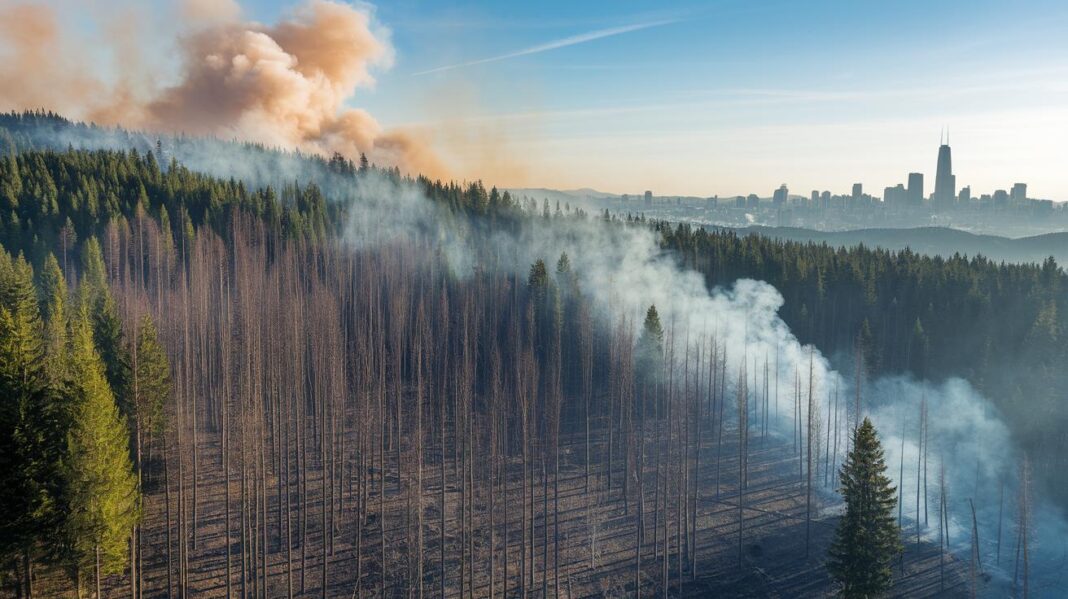
Did you know that cutting down forests may speed up global warming? Trees act as nature's air cleaners, absorbing CO₂ (carbon dioxide) from the air. When we remove these forests, we not only lose one of our best defenses but also release stored carbon. This extra carbon heats our planet more. Our report explains how deforestation links directly to climate change and shows why preserving forests can help cool our future.
How Deforestation Directly Drives Climate Change
Forests help slow down global warming by soaking up CO₂ (a greenhouse gas) from the air. When trees are cut down for farming, building, or mining, these natural filters disappear. This loss lets more harmful gases build up in our atmosphere, speeding up warming.
Data from FAO 2020 shows that farming causes almost 90% of the world's forest loss, with livestock grazing making up about 40% of that loss. When trees are removed, the carbon stored in their wood and the soil is released through burning, decay, or soil disruption. This process sends CO₂, methane (a strong warming gas), and nitrous oxide (another heat-trapping gas) into the air, boosting the warming effect.
This problem goes beyond just fewer trees. Warmer temperatures stress the trees that remain, making them more prone to disease and fires. This, in turn, releases even more carbon and sets off a vicious cycle that makes the climate even hotter. UN-REDD estimates that stopping deforestation could cut emissions by 4 gigatonnes of CO₂ a year, while healthy forests can capture about 7.6 gigatonnes of CO₂ every year.
In short, cutting down forests not only adds more carbon to the air but also fuels a chain reaction that makes global warming worse.
Carbon Cycle Disruption from Deforestation
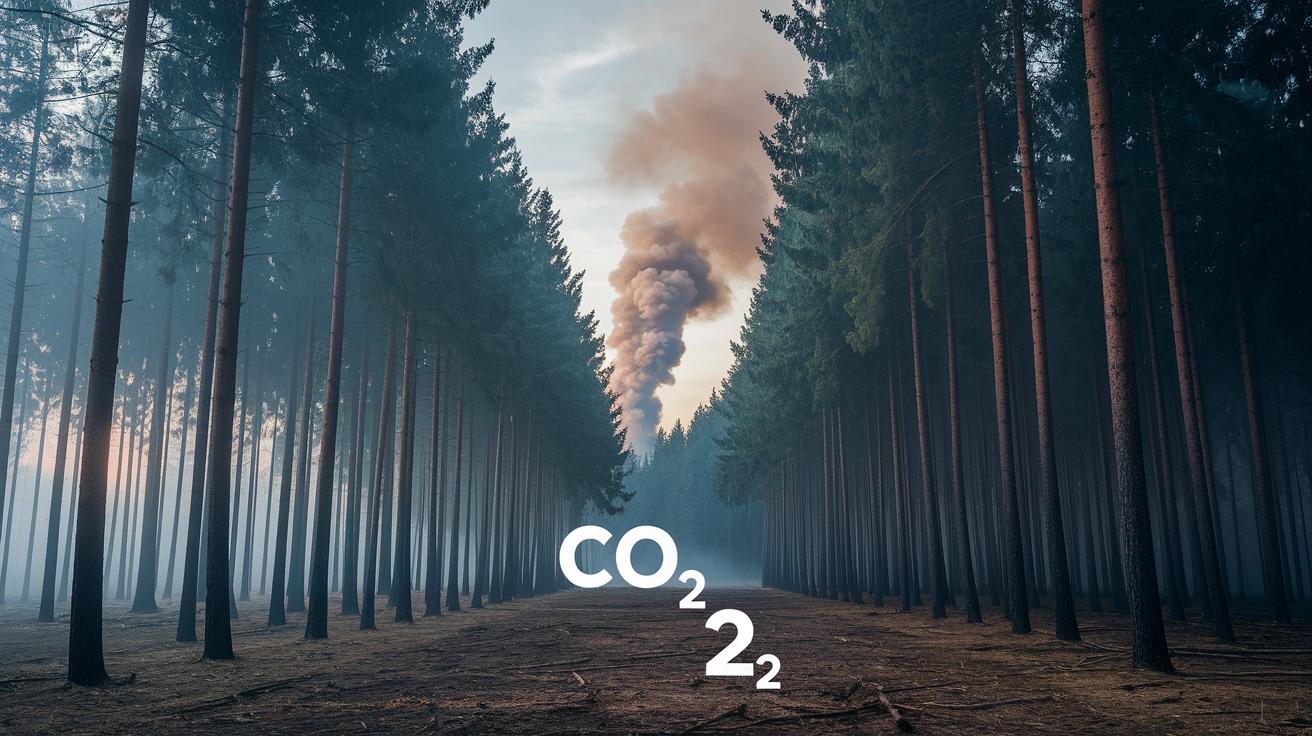
Forests help control the climate by storing CO₂ in wood and soil. Every year, global forests absorb about 7.6 Gt of CO₂ (gigatonnes of carbon dioxide), which cools the planet. When trees are cut, much of this stored carbon is released into the air, adding to greenhouse gas levels.
Deforestation starts several changes in the natural carbon cycle. For example, burning trees sends carbon into the atmosphere almost instantly. In contrast, decaying wood and disturbed soil release carbon slowly over time. Tropical soils, which can hold up to 25% of an ecosystem's carbon, lose this storage ability once they are cleared. Without trees to capture CO₂, the air holds more carbon, which further warms the climate.
Key emission sources include:
- Burning of above-ground biomass.
- Decay of logging residues and harvested wood products.
- Soil carbon oxidation during land clearing.
- Methane and nitrous oxide from slash-and-burn practices.
Each of these sources creates an imbalance in the carbon cycle. Clearing forests for other land uses disrupts this balance and makes it harder to control global warming.
Altered Water Cycles and Weather Patterns after Deforestation
Forests help move water by releasing moisture into the air through processes like transpiration and evapotranspiration (the way plants give off water). When trees are removed, their leafy cover that recycles moisture is lost. This means that areas receive less rain. Without a full canopy, rain runs off the ground instead of soaking in, which can lead to flooding and soil erosion.
Removing trees also changes local weather. In places that lose their natural shade, daytime temperatures can rise by 2 to 3 °C. After a single forest clearing, local temperatures have been seen to spike during the day, turning small gaps into mini heat islands.
Key impacts include:
- Less rain because of reduced moisture recycling
- More runoff leading to flooding
- Faster soil erosion
- Longer dry seasons
These shifts affect how crops grow and reduce water for local communities. Without nature to balance things, water does not soak into the soil as it should, causing unpredictable weather and unstable ground. This shows why it is vital to protect forest canopies to keep local weather steady.
Climate Feedback Loops and Extreme Weather in Deforested Areas
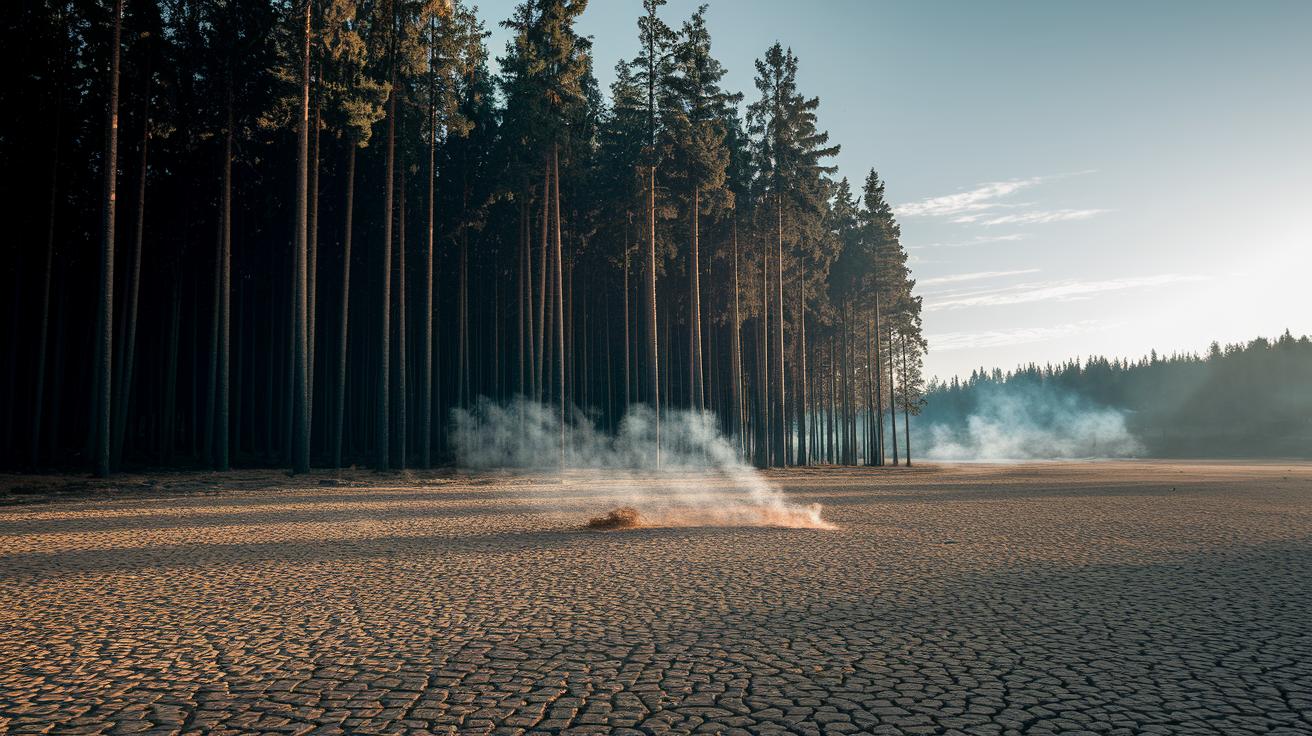
When forests vanish, the weather chances get worse. Removing trees means less shade and moisture. The land heats up fast in the sun. This creates tiny hot spots where temperatures can be several degrees higher than nearby areas. That extra heat can lead to more and stronger heat waves.
Losing forests also messes up the water cycle. Bare soil lets water evaporate quickly, which means there is less moisture to form rain. Without enough rain, areas can suffer long droughts. Then, when heavy rain does come, it can cause sudden floods and wash the soil away.
Dry and hot conditions make wildfires more likely. When fires burn, they take away even more trees. This loss makes the land drier and hotter, and the cycle goes on. Together, these problems stress local environments and the people who live there.
In short, cutting down forests disrupts nature's way of balancing the climate. This sets off a chain of events that makes weather more extreme. It shows why taking action to adapt to climate change is urgent.
Biodiversity Loss from Deforestation and Implications for Climate Stability
Cutting down forests takes away the homes of many species, which leads to a drop in biodiversity. With fewer species, nature loses its strength and balance. Trees and animals help capture carbon, clean water, and control pests. When their numbers decline, these natural services weaken, and communities face higher risks during tough environmental times.
Losing species also disrupts food chains. This makes ecosystems less able to cope with changes in weather and temperature. UN SDG 15 calls for stopping land damage and protecting nature to help our climate. As natural habitats shrink, they offer fewer benefits, leaving the environment less ready to face surprises like heat waves, floods, or droughts.
Key points include:
- Loss of habitat reduces species populations.
- Fewer trees and animals mean less carbon is captured and stored.
- Water filtering and pest control suffer, which can unsettle local climates.
- The risk of extreme weather events increases.
Overall, deforestation leaves us with a less stable climate and weaker natural defenses against the effects of global warming.
Mitigation Through Reforestation and Sustainable Forest Management
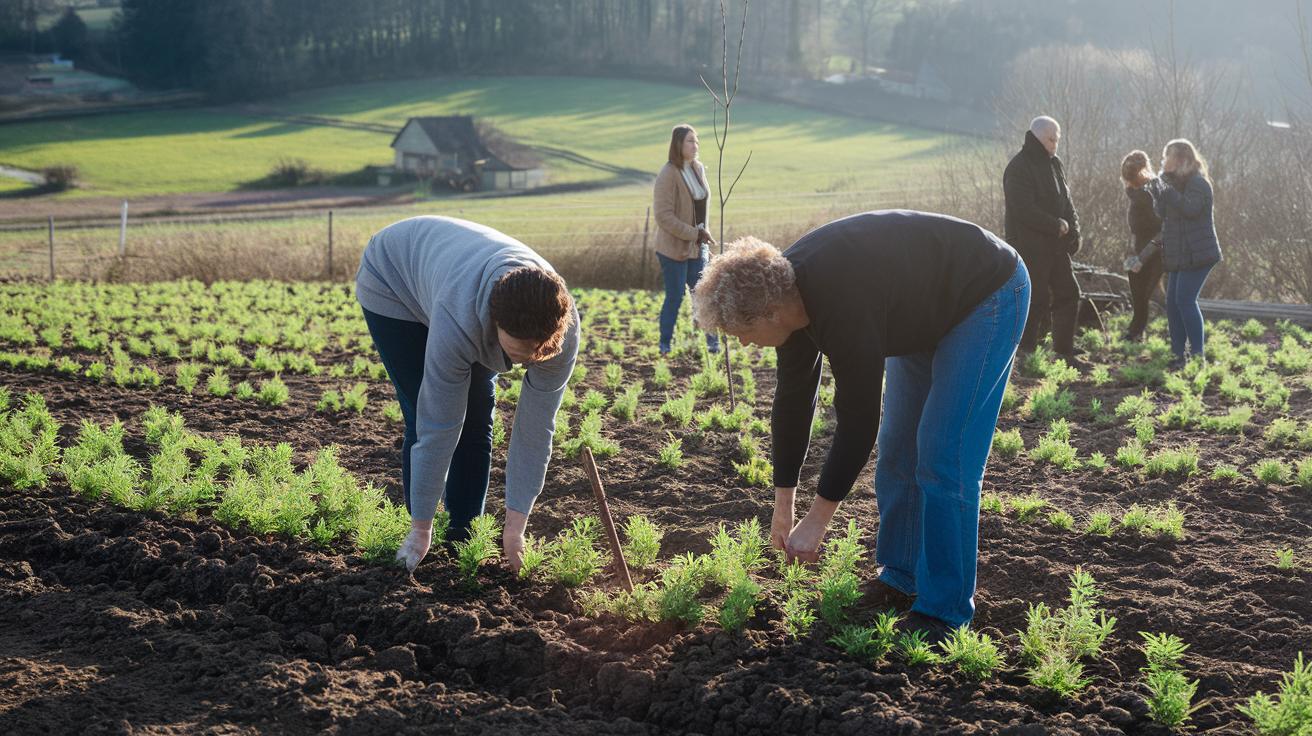
Planting new trees (reforestation) and starting fresh forests (afforestation) can capture roughly 22 Gt CO₂ each year. Planting trees and restoring natural habitats will help cool our planet while improving local environments. Agroforestry (mixing farming with tree planting) boosts soil health and stops more land from being cleared. This method not only pulls carbon from the air but also supports rural economies, making sustainable practices more attractive to communities that depend on their land.
Several clear steps can drive these efforts forward. These include:
- Large-scale programs for planting new trees and forests
- Setting up agroforestry systems
- Using certification programs (like FSC and PEFC) to ensure products come from land with natural cover
- Enforcing government rules to ban deforestation
- Employing satellite and blockchain tools to monitor forests
Certification programs help confirm that wood and farm products come from lands that keep a natural cover. At the same time, satellite checks paired with blockchain technology boost transparency so everyone can see progress and verify if rules are followed. Rules that ban deforestation push companies to adopt sustainable practices instead of clearing land for short-term gain.
This hopeful view on forest conservation shows that mixing tree planting with modern tech and strong rules can turn environmental trends around. With government backing and community support, sustainable forestry builds strong, lasting systems. These systems protect our natural carbon stores while offering a path to restore wildlife and boost rural economies.
Final Words
In the action, the article detailed how deforestation affects climate change by altering carbon cycles, water patterns, and weather extremes. It discussed emissions from biomass burning, decay, soil oxidation, and feedback loops that worsen regional warming. The post also highlighted the loss of biodiversity and stressed the urgent need for reforestation and sustainable forest management to stabilize climate risks. Each point reinforces that strong policies and innovative monitoring can reduce the impact of forest loss while moving us toward a brighter, more sustainable future.
FAQ
How does deforestation affect climate change?
The impact of deforestation on climate change is that removing trees eliminates natural carbon sinks, raises greenhouse gas levels, and drives warming. Studies often detail how this process intensifies global temperature rise.
How does deforestation affect the atmosphere and environment?
Deforestation affects the atmosphere and environment by reducing oxygen production and increasing carbon dioxide, which disrupts water cycles, soil health, and encourages extreme local weather patterns.
How does deforestation affect humans?
The effect of deforestation on humans is seen in increased climate risks, such as unstable weather, poor air quality, and diminished water resources that can impact agriculture and community well-being.
How does deforestation impact the carbon cycle?
Deforestation impacts the carbon cycle by releasing stored carbon during tree burning and decay, which raises CO₂ levels and disrupts the natural balance of carbon absorption and emission.
What are the main effects of deforestation?
The main effects of deforestation include more carbon in the air, changes in rainfall patterns, loss of biodiversity, soil erosion, and altered local climates, all of which add to global warming challenges.
How do trees affect climate change?
Trees affect climate change by absorbing CO₂ through photosynthesis, which moderates global temperatures; cutting them down reduces this benefit and contributes to greater atmospheric warming.
What are the primary causes of climate change?
The primary causes of climate change include fossil fuel burning, deforestation, industrial emissions, agricultural practices, and waste handling, all of which add greenhouse gases to the atmosphere.