

Can one person change healthcare? Health advocates guide people through complex systems to secure safe housing and quality care. In one rural county, an advocate helped 50 families get essential services and fix confusing billing problems. They connect patients, doctors, and insurers while pushing for fair policies. Their work shows how focused action can build healthier communities and make a lasting difference.
The Role and Impact of Community Health Advocates
Community health advocates help make sure everyone is treated fairly in our sometimes confusing healthcare system. They connect patients who need care with the services that can help. In one rural county, an advocate helped 50 families find safe housing and medical care even when providers were few. They guide people through different services, making care easier to get.
Advocates also work between patients, doctors, and insurers. They clear up financial issues by coordinating with healthcare providers and insurance companies. One advocate quickly arranged care by fixing a billing mix-up. Their work makes sure vulnerable people get food support, mental health help, and other key services.
By learning local health challenges well, these advocates use real-life insights to push for better policies. They offer simple ideas to government agencies and community leaders to improve care. National data backs up the fact that advocacy makes healthcare more equal. This work not only helps individual patients but also shapes fairer health policies for communities across the nation.
Core Responsibilities of Community Health Advocates
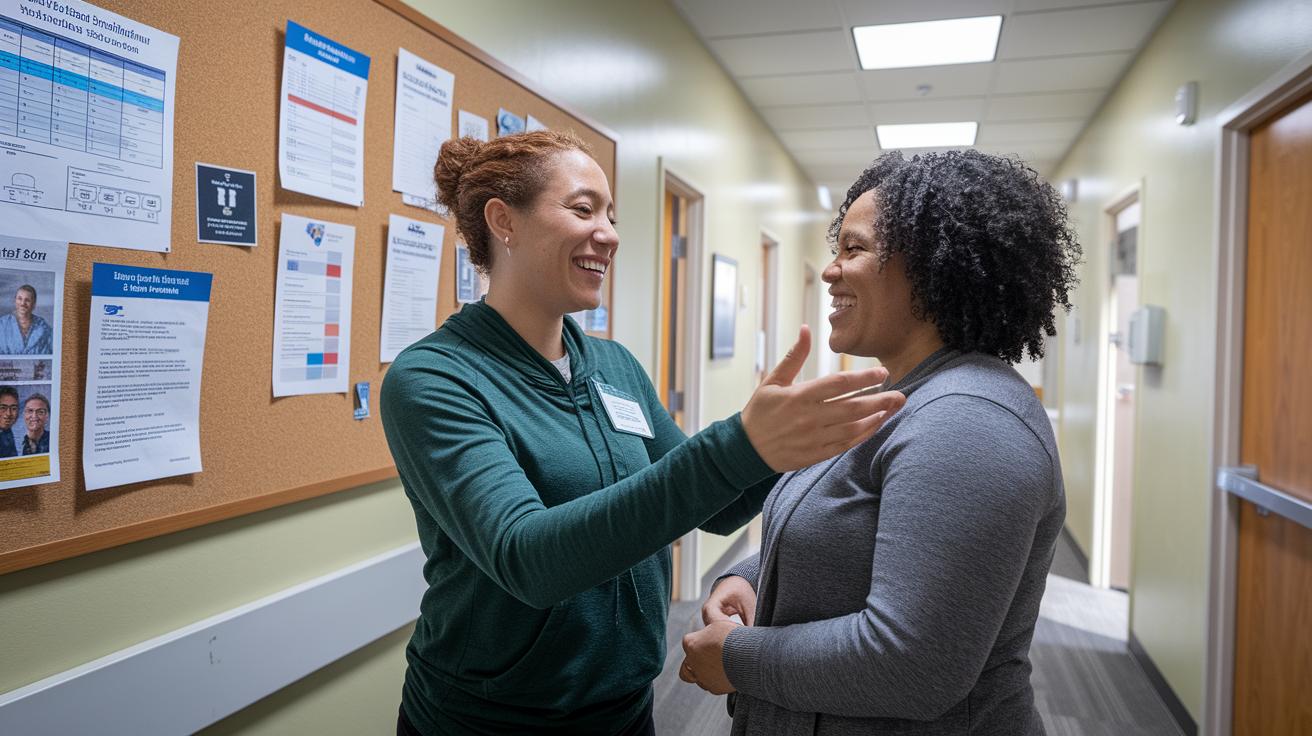
Community health advocates help patients find the care and services they need. They guide people through a complex system to get treatment, safe housing, food support, and mental health help. These advocates work closely with doctors, insurance companies, and social agencies. They also inform the community about their rights and available benefits while gathering first-hand information to make health care better.
- They review patient needs and refer individuals to medical care, housing programs, and food services so everyone gets the right help.
- They connect patients with providers and payers to quickly resolve financial and procedural issues.
- They follow up on care and appointments to ensure patients receive treatment on time.
- They plan community events and health fairs to bring essential services and information directly to local residents.
- They educate community members on how to sign up for and keep insurance coverage.
- They provide language support in Spanish, Russian, Chinese, Haitian Creole, Bengali, and Korean to promote cultural understanding.
- They use the information they collect on the frontlines to advocate for policy changes that improve resource allocation and remove barriers to care.
These actions help boost public health, increase community engagement, and create a support system that adapts to local needs.
Work Environments and Career Paths for Community Health Advocates
Community health advocates work in a variety of settings. They often serve in large nonprofits or community clinics to help people who need extra support. Some take on roles with local health departments or volunteer groups, guiding residents to safe housing, food, and care services. In cities, they help busy clinics run smoothly. In rural areas, they act as champions who fill service gaps. Each setting has its own challenges and rewards as they build trust with patients and connect with local resources.
Many career paths in this field require a post-secondary credential. Advocates often receive on-the-job training or earn advanced degrees to move into roles like multidisciplinary agents or integrated care consultants. National labor data shows steady growth in healthcare and social service jobs, which means skilled advocates are in high demand. Whether they work for pay or as volunteers, these professionals gain experience that can lead to leadership roles. Their efforts not only support individual patients but also strengthen community health networks and improve long-term services.
| Work Setting | Typical Roles | Entry Requirements |
|---|---|---|
| Large Nonprofits | Patient support specialist, care coordinator | Associate or bachelor’s degree, on-the-job training |
| Community Clinics | Health navigator, outreach worker | Post-secondary certification, relevant experience |
| Volunteer Groups | Local health advocate, community liaison | High school diploma with volunteer training |
| Health Departments | Program manager, public health advisor | Advanced degree preferred, practical experience |
Education, Training, and Certification for Community Health Advocates

Many community health advocates begin their journey with college programs that go beyond a high school diploma. Popular paths include earning an associate’s or bachelor’s degree in public health or social work. These programs teach the basics of health care and social services. For instance, a student might learn the fundamentals of public health and then study real-life examples that prepare them for work in local communities.
On-the-job training programs offered by health nonprofits or local health departments give candidates practical experience. In these programs, future advocates practice skills through role-playing and live problem-solving. One training may mimic a typical day at a community clinic, blending classroom lessons with real-world practice.
Certification is also a key step in this career path. National organizations offer certifications, such as the Certified Community Health Worker, to prove a professional’s skills and boost job chances. These programs mix classroom learning with hands-on tests. Think of certification as a mark that can open doors to better opportunities.
Internships and practicum experiences further prepare advocates by involving them in case management and outreach work. Through these placements, trainees get to practice managing patient care, finding local resources, and talking clearly with different groups. This real-world work builds confidence and refines the skills needed for effective community advocacy.
Essential Skills and Qualities of Community Health Advocates
Community health advocates are great at talking with people. They use simple and clear words to reach all kinds of folks. They help bridge language gaps and respect different cultural backgrounds. For example, an advocate might say, "Think of me as your guide in a busy maze, here to lead you safely to the services you need." This clear approach builds trust and makes sure everyone gets the information they need. Their strong listening skills and genuine empathy mean they notice even small hints in a conversation, so every individual feels heard.
These advocates also have sharp analytical skills. They study community health data to find gaps in services and work with teams of doctors, social workers, and other partners to watch over follow-ups and appointments. Their ability to handle pressure and work well with others helps them support people during tough times. By combining these skills, community health advocates drive changes that improve patient care and boost health equity in the community.
Local Community Health Initiatives and Case Studies Featuring Community Health Advocates

A variety of projects show how community health advocates deliver key services directly to people. A network of non-profit legal groups, brought together through a formal request for proposal, supports health assistance programs nationwide. Efforts in six languages help urban communities get vital services right away. A helpline runs Monday to Friday from 9 a.m. to 4 p.m. at (888) 614-5400 to offer quick guidance. More than 800 organizations have teamed up to protect Medicaid funding and secure $7.87 billion in annual support, proving the real impact of these efforts.
Urban Community Outreach Program
In one city, a dedicated outreach program helped over 300 families in 2023. The program provides support in Spanish, Russian, Chinese, Haitian Creole, Bengali, and Korean. Local advocates serve as grassroots mobilizers and work with partners to connect people with needed medical care, safe housing, food, and mental health resources. They make sure residents receive care that fits their culture and clear advice to navigate the health system. One advocate said, "We fill in the gaps many face, making sure no one misses out on vital help."
Rural Support Initiative
In rural areas, committed teams of advocates have cut care gaps by 20% by working with local clinics and volunteers. The program aims to improve health access in regions that often lack services. Local advocates plan community events and work with nearby providers to offer direct help and education. Using frontline data, they help rural residents overcome obstacles and boost health outcomes. Both projects show how local efforts can influence policy and enhance community well-being.
Step-by-Step Guide: How to Become a Community Health Advocate
Starting a career as a community health advocate needs both study and field experience. Follow the steps below to build your foundation with public health classes, volunteer work, and on-the-job training. Most positions require college education along with hands-on experience from internships or training programs. Job opportunities in this field are expected to grow by 11% over the next ten years, so networking and practical learning are key.
-
Research educational programs and certifications
Check out community colleges, universities, and certificate courses in public health or social work. These programs cover the basics and essential skills you need. -
Earn a degree or certificate
Complete an associate’s or bachelor’s degree or a certificate program that meets the requirements for community health roles. -
Apply for internships or volunteer roles
Gain firsthand experience by working at clinics or nonprofit organizations. This work helps you understand how to support patients directly. -
Join on-the-job training programs
Sign up for training sessions offered by health organizations. These courses mimic real-life situations and boost your problem-solving skills. -
Get CHW or related certification
Earning a certification shows you have the required skills and makes your resume stand out. -
Connect with local advocacy networks
Build your network by joining community groups and professional associations. Sharing ideas and best practices can lead to better opportunities. -
Find a mentor and start with entry-level positions
Learn from seasoned professionals and begin your career in a role that offers both challenges and rewards.
Success Stories and Profiles of Inspiring Community Health Advocates

In Texas, a community health advocate led a national call-in day that sparked action in Congress to protect Medicaid. They brought together thousands, making sure patient rights were a top topic in debates on health reform. Their clear and direct approach helped push lawmakers to secure essential services.
In Ohio, another dedicated advocate formed a local group that asked for a pause on a pilot rebate program affecting more than 260 providers. By uniting nonprofits and health centers, the group built a strong voice that led to policy reviews and better resource distribution. Their work shows that coming together can keep decision makers responsible and lead to real change.
At a New York community center, a peer educator increased screening rates by 25% in underserved areas with focused health workshops and one-on-one support. By turning complex ideas into simple advice, this advocate gained trust and improved care access. Their achievement underlines how peer-led education can make health services easier to reach and more effective.
Final Words
In the action, the piece showed how community health advocates work every day to support patients, break down barriers, and connect individuals with vital services. It outlined their roles in mediation, education, and policy influence, and highlighted practical steps toward a successful career.
These dedicated professionals drive improvements in healthcare access and equity across both urban and rural settings. Their efforts inspire hope and bolster progress, proving the value of community health advocates for a stronger, more responsive health system.
FAQ
What does a community health advocate do and what is their role?
The community health advocate works to ensure fair treatment in healthcare systems by assisting vulnerable individuals with safe housing, food support, and mental health resources. They also mediate between patients and providers.
What jobs are available for community health advocates?
Community health advocates work in nonprofits, community clinics, health departments, and volunteer groups. Many roles require post-secondary education, on-the-job training, or certification to advance in the field.
Are there volunteer opportunities for community health advocates?
Many advocacy roles begin as volunteer positions, allowing individuals to build valuable experience and network with professionals while providing essential services to local communities.
What salary can you expect as a community health advocate?
The community health advocate salary varies by location, experience, and qualifications. Full-time roles in nonprofits or clinics generally offer competitive wages aligned with specialized skills and training.
How can I find community health advocates near me or in NYC?
A search for community health advocates near you or in NYC leads to local organizations and dedicated portals that provide addresses, job listings, and volunteer opportunities in community health.
How can I get community health advocate certification?
Community health advocate certification typically requires a degree or on-the-job training plus an exam. Certification programs teach case management and outreach skills, boosting credibility in the healthcare field.
What does a healthcare advocate do and how are they paid?
A healthcare advocate helps patients navigate treatment, resolve financial barriers, and understand benefits. They usually receive a salary from nonprofits, health departments, or fee-based consulting roles.
How do I access the community health advocates portal or find their address?
Community health advocates often use dedicated online portals provided by local health departments or nonprofits. These sites list addresses, contact details, and job listings to assist community members.