

Ever wonder how tech designed for the military ends up in everyday tools? Dual use tech takes research meant for weapons and turns it into things like the internet and GPS. This blend helps both defense and private markets. It makes products smarter and safer. Big players show that when government support mixes with private funds, the results can be huge. This article looks at how these advances change our daily lives and boost market competition.
Comprehensive Overview of Dual Use Tech: Definitions, Applications, and Market Impacts
Dual use tech means systems designed for both civilian and military roles. They start as defense projects that later bring benefits to everyday life. For example, the Internet began as a secret project funded by the Department of Defense before it became a communication tool for everyone. NASA’s space programs also paved the way for many of today’s versatile technologies.
Defense research has often sparked commercial breakthroughs. In recent years, venture capital has surged as companies work to win both public contracts and private market deals. This mix of government funding and private investment drives advances in areas like satellite operations and unmanned systems. When these funds combine, companies take smart risks that lead to big rewards.
- Satellite operations units
- Unmanned aerial systems
- Cybersecurity platforms
- Advanced materials manufacturing
- Precision navigation
Dual use tech also makes a strong market impact. More venture capital, alongside strategic government partnerships, boosts both innovation and economic growth. Firms must juggle long procurement cycles and sync their commercial launch plans with regulatory rules. These challenges push companies to sharpen their risk management and licensing practices, which in turn strengthens product development. As a result, dual use tech keeps pushing boundaries in both public services and defense, making markets more competitive and secure.
dual use tech: robust cross-sector progress

Top companies are making dual use tech work for both defense and business. Big names like Palantir, Epirus, Shield AI, Hawkeye360, and Anduril win major government deals and pull in private funds. Their work shows that tech made for the military can also boost civilian solutions. Before these companies landed big government deals, they focused on tech experiments. A shift in funding changed their course.
Proteus Space is a clear leader in this field. Its CEO brings over 20 years in government contracts. Its CTO spent 25 years at NASA JPL (Jet Propulsion Laboratory). The team recently opened its first satellite factory as they chase more defense contracts. This blend of government know-how and business drive shows how dual use tech can grow, especially in aerospace.
Hybrid aerospace projects mix defense needs and civil benefits. They use new tech to improve national security, satellite services, and communication. The success of these companies proves that teaming up across sectors sparks both innovation and growth. By matching military needs with market trends, the industry opens up new ways to progress.
Ethical and Geopolitical Implications of Dual Use Tech
Dual-use tech is key for national defense. It links new innovations with defense needs. Governments see these systems as vital for protecting important infrastructure, ensuring secure communications, and running strategic operations. Combining military and civilian technology tackles pressing security challenges while sparking debates about how much to share and how much to control. Cooperation across sectors remains essential to keep critical systems safe in a changing world.
Rules on intellectual property and guidelines on environmental, social, and governance issues add extra layers of complexity. Projects tagged as dual use often face stricter limits on sharing technology and endure longer approval processes. These constraints can slow down new ideas. Companies must protect their valuable designs while meeting standards that aim to protect the public, raising tough questions about risk and reward.
Calling a project dual use may also restrict access to alternative funding and banking services. Amid rising geopolitical tensions like those seen in the Russo-Ukrainian conflict, investors and banks might steer clear of ventures they view as risky. This uncertainty forces companies to navigate a tough regulatory landscape while adjusting their business models and risk strategies to match changing global security tech policies and funding markets.
Legal and Regulatory Framework for Dual Use Tech

Government oversight of dual use tech means following tight export controls and a full set of rules. Getting a license or completing procurement can take many months. It involves lots of paperwork and several approval steps. Export controls check that items used for both civilian and defense purposes meet strict standards before being sent overseas. For instance, the U.S. Export Administration Regulations (EAR), the EU Dual-Use Regulation 428/2009, and the Wassenaar Arrangement all set clear rules about who can buy these items and under what conditions.
Export Controls
Export controls set the rules for moving high-tech materials across borders. In the U.S., the EAR is run by the Department of Commerce. It uses checks on the end-use and end-user to stop sensitive technology from going to the wrong hands. In Europe, the Dual-Use Regulation 428/2009 covers many items with broad controls, checking even those not specifically listed. The Wassenaar Arrangement is a pact among several countries that uses list-based controls, ensuring consistent standards. In short, these rules help keep sensitive technology safe.
Compliance Procedures
Companies must stick to strict steps to get their export licenses. They start by submitting an application and keeping detailed records of the export. Applicants need to provide technical details and full information about the buyer so that everyone knows the planned end-use. This documentation proves that the export meets international rules. Sometimes, the process includes periodic reviews and special exemptions for national security. These steps are key to balancing market innovation with international safety standards.
| Regulation | Jurisdiction | License Duration | Key Requirements |
|---|---|---|---|
| EAR | U.S. | 1–3 years | End-use/end-user checks |
| Dual-Use Reg. 428/2009 | EU | 1–5 years | Catch-all controls |
| Wassenaar Arrangement | Multinational | Varies | List-based controls |
| National Security Exemptions | Various | Case-by-case | Special authorization |
Market Impact and Investment Trends in Dual Use Tech
Venture capital funding for dual use tech companies has risen sharply. An industry study showed a 35% increase in Q3 2023 compared to the previous quarter. One company secured $50 million in just six months. This strong backing shows investors are confident in blending government contracts with fast-paced private market growth.
Investors now see dual use tech as a key area, thanks to trends like quicker product launches and growth in regional markets. Companies are also changing how they manage risk because new licensing rules and regulations mean extra challenges. Modern compliance tools and digital documentation have cut license approval times by 20% on average while still meeting global tech standards. This shift lets firms focus more on smart, innovative risk management that keeps them competitive and agile.
| Metric | Value/Change |
|---|---|
| Funding Increase (Q3 2023) | 35% |
| Approval Delay Reduction | 20% |
Future Trends and Emerging Innovations in Dual Use Tech
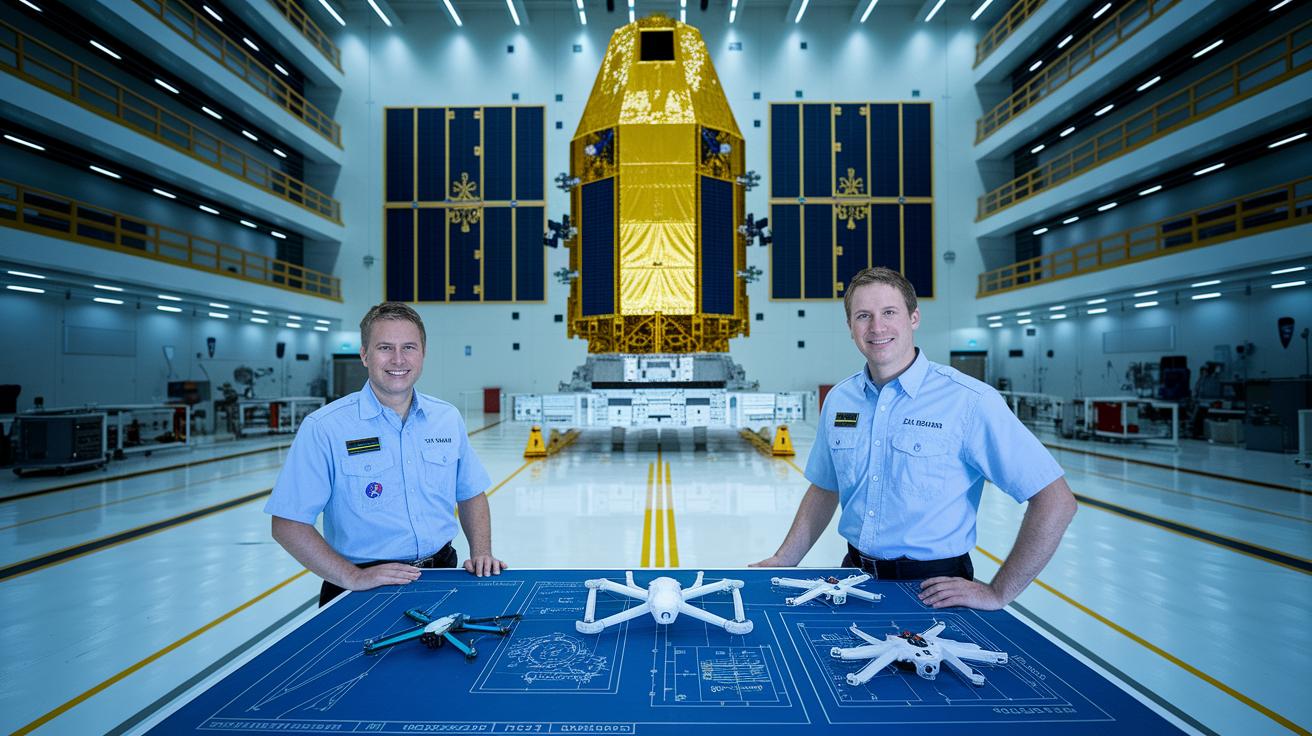
Defense and commercial aerospace are coming together in new ways. New satellite factories like Proteus Space show big growth by mixing military and civilian tech. Companies are now making dual-use systems that combine old flight designs with AI-powered smart vehicles. This mix creates flexible systems that support both defense projects and everyday uses. For example, a new navigation tool might boost drone flights and improve urban travel. These changes are set to make systems safer and more efficient.
New business models are also sparking fresh ideas. Companies are planning strategies that meet government contract needs while moving fast in the commercial market. They are building smart security models that use modern data analysis and simpler compliance steps. Both startups and established firms are testing new partnerships and funding plans to serve both markets. For example, adding affordable automation can speed up product development and raise performance. These new models are driving progress in both the technical and strategic sides of dual-use technology.
Final Words
In the action, we broke down the rapid evolution of dual use tech by exploring its history, core applications, legal rules, and market trends. We reviewed key industry players and how investments shape future innovations. By examining ethical and geopolitical challenges along with export compliance, the discussion mapped a dynamic field where technology meets strategy. The insights shared here offer clear, solid guidance for those tracking developments in dual use tech, leaving us optimistic about its potential to drive impactful change worldwide.
FAQ
Q: What are some examples of dual-use technology in military, defense, and space?
A: The examples of dual-use technology include unmanned aerial systems, cybersecurity platforms, precision navigation equipment, and satellite communications. These systems serve both civilian industries and military operations.
Q: What is an example of a dual-use item?
A: The example of a dual-use item is a satellite communication device that functions in civilian networks and military applications. Its multifaceted use makes it a prime example of versatile technology.
Q: Is AI considered a dual-use technology?
A: The assertion that AI is dual-use is valid as it supports industries like healthcare and finance while also powering military applications such as autonomous systems and surveillance.
Q: What is an example of a dual-use chemical?
A: The instance of a dual-use chemical involves substances used in industrial production that can also be adapted for controlled military purposes. Such compounds require tight oversight to prevent misuse.
Q: Is GPS considered dual-use technology?
A: The remark that GPS is dual-use is accurate because it was developed for military navigation and now also enhances civilian applications like mapping and vehicle tracking.