

Can learning about our changing climate help shape a better future? A recent report called the National Climate Assessment, released in November 2023, offers clear data and trusted insights on our shifting climate. The report draws on detailed data and input from 14 federal agencies to show clear trends and point out future challenges that lawmakers rely on. In this post, we break down these findings and explain what they mean for communities and decision-makers across the United States.
National Climate Assessment Overview and 2023 Edition
NOAA released the Fifth National Climate Assessment (NCA5) on November 14, 2023 as part of the US Global Change Research Program. This detailed report reviews US climate science with clear facts on current trends and future risks. It gathers data and insights from 14 federal agencies, giving it a wide range of expert input. For example, a small study grew into a nationwide project with many expert contributions, which shows the report's spirit of teamwork.
Work on the NCA5 began in 2020. It went through a public comment and scientific review period in fall 2022, and final changes were wrapped up in summer 2023. This long process shows that our understanding of climate impacts is growing, and it makes the report more trustworthy. Now, researchers and policymakers have a solid evaluation of how climate change is affecting different regions and sectors across the United States.
The report is an important tool for understanding and dealing with climate challenges. Its goal is to guide decision-makers at federal, state, and local levels in handling impacts and adapting to changes. Focused on community needs and future planning, the report has several key aims:
- Assess current and projected climate impacts
- Inform federal, state, and local decision-making
- Integrate regional and sector-specific analyses
- Support community preparedness and resilience planning
National Climate Assessment Methodology and Data Tools

The National Climate Assessment uses several trusted tools to show real climate data. The Climate Shift Index collects daily global temperature readings with methods that experts have checked for accuracy. In addition, the Ocean CSI and Tropical Cyclone CSI give numbers on ocean warming and storm strength. One researcher noted that the CSI figures help turn abstract trends into clear facts. These measurements let experts spot small changes in our fast-changing climate.
| Index Name | Purpose | Data Frequency |
|---|---|---|
| CSI – Global Temperature | Measure daily temperature changes | Daily |
| Ocean CSI | Track warming of the ocean surface | Daily |
| Tropical Cyclone CSI | Monitor shifts in storm strength | Event-driven |
| Coastal Risk Finder | Show coastal flood risks | Continuous model updates |
Additional tools like the Climate Data Concierge and custom graphics help both public users and key stakeholders. These models break down complex climate data into easy-to-understand trends. Analysts use this daily data for planning and quick responses. One local official said, "Seeing the daily shift data makes our planning more concrete." Overall, these tools build trust in climate reports and help communities prepare for future challenges.
Historical and Comparative National Climate Assessment Studies
The Fifth National Climate Assessment in 2023 shows a marked shift from earlier editions. Early reports offered a broad look at climate change. Later studies now offer a closer look at regional issues, fairness in how impacts are felt, and insights from Indigenous groups. This change aims to cover both scientific facts and community needs.
At first, only a few federal agencies participated in making these assessments. In 2000, the Second Assessment set the stage. The Third report in 2014 and the Fourth in 2018 brought more voices to the process. Today, the Fifth edition features strong teamwork among various federal departments and adds chapters that focus on local impacts.
Over time, each edition has introduced new methods and areas of analysis. The early reports mainly talked about overall climate trends. Recent versions include detailed regional studies and take environmental fairness seriously. They also combine traditional knowledge with scientific research to present a richer view of our changing climate.
National Climate Assessment: Bright Future Insights
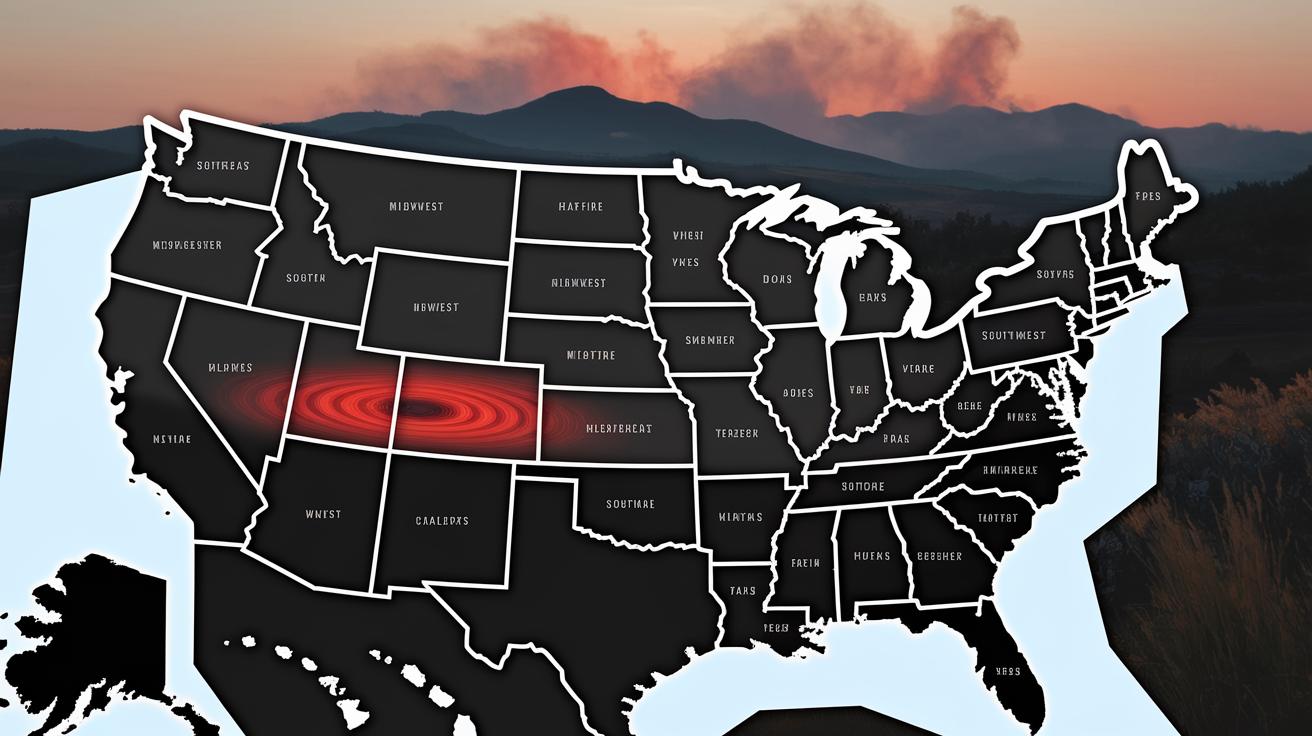
The NCA5 report explains how climate change affects different areas of the United States. It lays out trends like warming, changing rain patterns, and rising sea levels. For example, the Northeast is expected to deal with coastal flooding that will affect future building plans.
In the Southeast, extended heat waves may put pressure on public health and energy supplies. Meanwhile, the Midwest will face more droughts that can hurt water supplies and farming. In the Southwest, officials are preparing for more wildfires that threaten homes and the environment. As one expert put it, "Tailored regional insights make climate science practical for everyday decision-making."
This detailed look at climate change helps local leaders plan better. The study gives clear data for each region so that communities can prepare for many possible scenarios. Local governments can use this information to create smart strategies for public safety, resource use, and infrastructure improvements.
| Region | Key Impact | Projection Period |
|---|---|---|
| Northeast | Coastal flooding | 2020–2050 |
| Southeast | Heat waves | 2020–2050 |
| Midwest | Drought | 2020–2050 |
| Southwest | Wildfires | 2020–2050 |
| Great Plains | Agricultural stress | 2020–2050 |
| Northwest | Snowpack decline | 2020–2050 |
| Alaska | Permafrost thaw | 2020–2050 |
| U.S. Caribbean | Hurricane intensity | 2020–2050 |
The findings show that as temperatures continue to rise, each region will face its own challenges. Local governments can use these insights to plan smarter by focusing on the unique needs of their areas. This work combines scientific facts and community concerns to help people build stronger, more resilient futures.
Policy and Adaptation Strategies from the National Climate Assessment
The NCA5 report explains some important policy changes meant to help leaders at the federal, state, and local levels. It calls for updates to our infrastructure and land planning to keep up with climate risks. One expert explained, "Planning has become a group effort with clear links between rules and real-world actions." In short, taking action now can lower long-term risks and help shape rules to protect communities.
The report also focuses on fairness. It shows that climate change affects vulnerable communities in different ways. It urges policies to include Indigenous knowledge (the traditional wisdom of native peoples) so that old practices can guide modern risk assessments and fair resource sharing. Locals say that when their voices are heard, the plans better match the unique challenges they face.
The NCA5 report recommends clear steps to boost community readiness. It calls for strengthening critical services, increasing local engagement, and investing smartly in lowering risks. These steps offer local governments a clear path to better prepare against climate events. By linking safety investments to solid research, the report aims to help communities adjust to both current and future climate pressures.
Accessing and Using the National Climate Assessment Reports

NOAA (the National Oceanic and Atmospheric Administration) has restructured its Climate Assessment documents to follow Executive Order 14303. Now, the federal environmental report pages have dedicated sections where you can download the latest reports along with older ones.
On the site, you'll find official pdf releases and public documentation for every edition. Additional resources are available too, including fact sheets, annual updates, and SciLine expert connections that break down key climate science details in plain language.
The new site design makes it simple to find and download each report. This ensures that policymakers, researchers, and the public can easily access full climate findings and data.
Follow these steps to get the reports:
- Fifth National Climate Assessment – Download the current official pdf version.
- Fourth National Climate Assessment – Access Volume 1 directly as a pdf.
- Third National Climate Assessment – Download the May 2014 pdf for a detailed review.
- Second National Climate Assessment – Get the report for historical climate insights.
- First National Climate Assessment – View the archived pdf with complete details.
Final Words
In the action, the post explored the key features of the Fifth National Climate Assessment. It highlighted its timeline, strong federal coordination, and the analytical tools shaping its insights. We reviewed historical context, regional impacts, and practical policy recommendations that guide community resilience.
This national climate assessment report offers clear evidence to inform decision-making, support strategic planning, and help assess current and projected climate impacts. The report stands as a solid resource for understanding the risks and planning positive steps forward.
FAQ
What is the National Climate Assessment 2023?
The National Climate Assessment 2023 provides a detailed review of U.S. climate science and impacts. It is coordinated by NOAA with multiple federal agencies to outline current risks and future challenges.
What is the Fifth National Climate Assessment (NCA5) 2023?
The Fifth National Climate Assessment, released in November 2023, offers an in-depth analysis of climate science, evaluating present impacts and projecting future risks with contributions from 14 federal departments.
Where can I access the Fifth National Climate Assessment PDF?
The Fifth National Climate Assessment PDF is available for download via official NOAA and government websites, ensuring public access to comprehensive climate evaluation data.
What are National Climate Assessment 2024 and 2025?
National Climate Assessment 2024 and 2025 refer to upcoming or updated reports that will continue to assess climate impacts, reflecting ongoing research and evolving climate policy.
What does National Climate Assessment 6 mean?
National Climate Assessment 6 may denote a future iteration beyond NCA5 or serve as a version identifier. Formal details will be provided through official agency announcements.
How can I obtain a National Climate Assessment PDF?
National Climate Assessment PDFs from previous and current editions are distributed through NOAA’s dedicated webpage, where users can download complete reports and supplementary materials.