

A Document That Connects the World
In 1948, world leaders adopted the Universal Declaration of Human Rights. The document sets out basic rights like free movement and the right to live with dignity. Its clear words push back against injustice and offer hope for unity. Read on to learn how this historic paper has helped communities work toward a fairer future.
Universal Declaration of Human Rights Inspires Global Unity
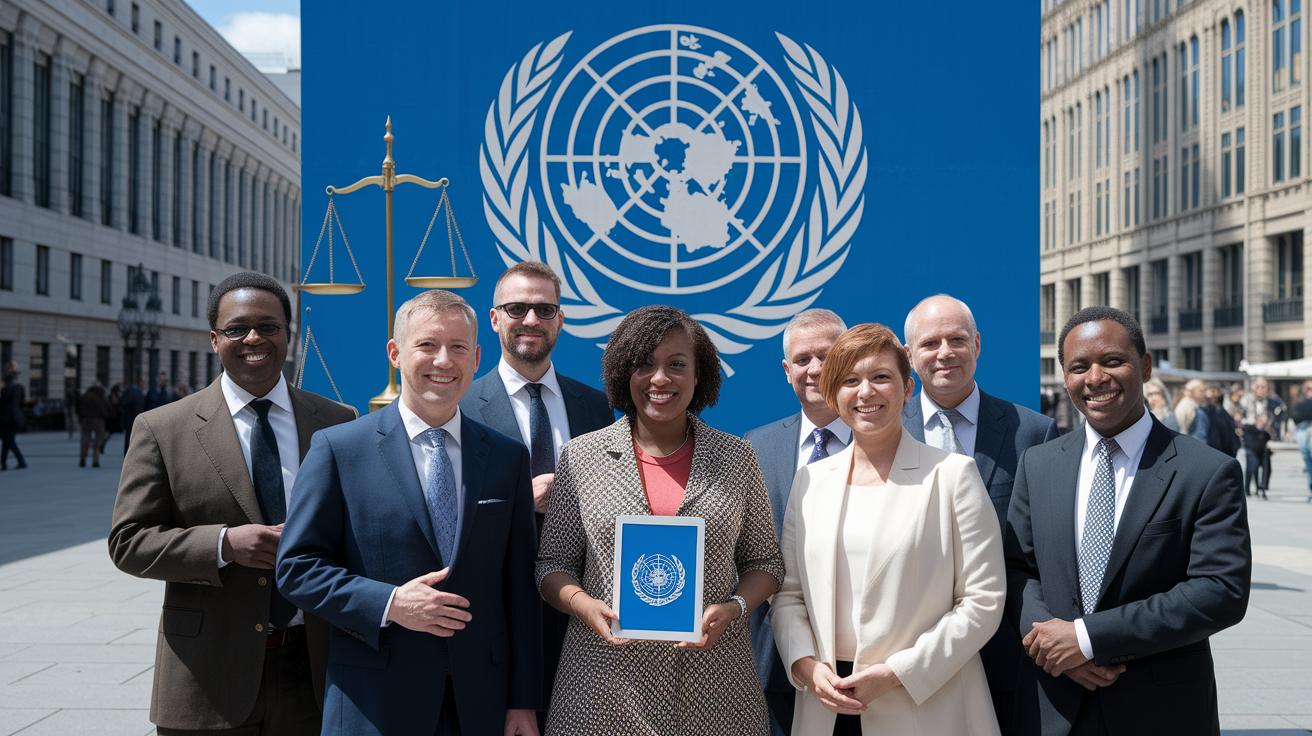
The Universal Declaration of Human Rights (UDHR) was adopted by the UN General Assembly on Dec. 10, 1948. This key document promotes fairness and equality around the world by listing clear rights for everyone, no matter their background. Its preamble and 30 articles spell out basic freedoms like the right to life, freedom from slavery and torture, and equal treatment before the law.
The UDHR is written in a simple and clear style. It explains rights related to legal processes, privacy, free movement, and even the option to seek asylum (protection in another country). It also guarantees fair trials and respects family and property rights. The declaration stresses rights like education, work, and a decent standard of living, including food and shelter. For example, it states that everyone has the right to life, liberty, and security , a strong claim to basic human dignity.
While the UDHR is not a treaty that countries sign, it has led to more than 80 international conventions and treaties. Today, it is the most translated document in the world, available in many languages and dialects. This wide reach shows a shared promise to uphold moral and legal standards globally, uniting nations, legal systems, and civic groups under the banner of equality and human dignity for all.
Historical Origins and Adoption of the Universal Declaration of Human Rights

After World War II, global leaders came together to stop future atrocities. They wrote a document as a strong response to the horrors of war, aiming to promote fairness and respect for everyone. The UN General Assembly agreed on the document on Dec. 10, 1948, with Resolution 217 A (III). Before its adoption, representatives from 58 countries met in a room full of hope and urgency, all determined to stand up for human freedoms.
This key document was not designed for individual states to sign or ratify, yet its impact quickly spread. In 1950, it helped shape the European Convention on Human Rights and set a legal example that led to more than 80 international treaties over the years. This shows the Declaration's strong role in influencing laws around the world.
Recent events continue to highlight its importance. On Dec. 11, 2023, the UK House of Lords discussed its principles, and in April 2023, Ambassador Simon Manley confirmed its role as a core tool for international human rights. The Office of the High Commissioner for Human Rights has also called for a renewed focus on the Declaration to keep protecting rights across the globe.
Breakdown of Key Articles in the Universal Declaration of Human Rights

The Universal Declaration of Human Rights opens with a Preamble that declares: "We Are All Born Free and Equal." The first few articles set the stage by banning discrimination and recognizing the inherent worth of every person. Articles 1 and 2 state that everyone is born free, with equal dignity and rights. They make it clear that no one should be unfairly treated or left out.
Articles 3, 4, and 5 add important safeguards. Article 3 ensures the right to life, freedom, and safety. Article 4 bans slavery. Article 5 stops torture and cruel or degrading treatment. Later, Articles 6 through 11 promise that everyone will be recognized by the law, given equal protection, and receive a fair trial. These rules guarantee that legal rights and fair hearings are for all.
Other parts of the Declaration cover rights tied to personal freedom and family. Articles 12 to 15 protect privacy, the right to move freely, the chance to seek asylum (protection in another country), and rights related to nationality. Articles 16 and 17 secure the rights to family life and property. Articles 18 to 21 safeguard freedom of thought, speech, peaceful assembly, and participation in government. Finally, Articles 22 to 27 list economic, social, and cultural rights such as work, education, and a decent standard of living, while Articles 28 to 30 explain the duties and limits needed to exercise these rights for the common good.
| Article | Title | Summary |
|---|---|---|
| 1 | Equality | Born free and equal in dignity and rights. |
| 3 | Right to Life | Everyone has the right to life, liberty, and security. |
| 5 | Freedom from Torture | No one shall be subjected to torture or cruel treatment. |
| 10 | Fair Trial | Everyone is entitled to a fair and public hearing. |
| 26 | Education | Right to free, compulsory primary education and access to higher education. |
Implementation and Global Impact of the Universal Declaration of Human Rights

The Universal Declaration of Human Rights (UDHR) helped shape binding treaties and reforms around the globe. It led to key laws like the 1966 International Covenant on Civil and Political Rights and the International Covenant on Economic, Social and Cultural Rights by turning its main ideas into enforceable law. For example, the 1950 European Convention on Human Rights set a legal example by outlining rights that countries now protect. Before modern constitutions, this convention changed how governments operate.
More than 80 international documents carry the language and spirit of the UDHR. Many countries have woven its ideas into their laws and constitutions to keep rights like life, liberty, and justice strong. Recently, the Office of the High Commissioner for Human Rights urged nations to give the document new life, showing its ongoing role in legal reform.
Groups like civil society organizations, NGOs, and global justice movements use UDHR guidelines when calling for legal and social changes. Recent debates in the UK are clear markers that human rights laws continue to change. The UDHR stands as a steady guide as societies broaden their ideas of justice and fairness.
Global Influence and Translation Reach of the Universal Declaration of Human Rights

The UDHR is the most translated document in the world. It is available in hundreds of languages and dialects. Its official United Nations languages are Arabic, Chinese, English, French, Russian, and Spanish. In addition, there are translations in at least 20 more languages. This wide reach makes the UDHR a key tool for public servants, teachers, and non-governmental organizations. These groups use the multiple language versions to train staff and to teach communities about civil, political, economic, social, and cultural rights.
A simple phrase like "all people are born free and equal" speaks to people everywhere. It shares the idea that dignity and respect belong to everybody. The UDHR works as a global guide for equality. Classrooms, courts, and legal offices use its clear words to support rights around the world. Its many translations help people understand and fight for human rights in their own languages. This broad use shows how strong its message is in uniting people everywhere.
Contemporary Relevance of the Universal Declaration of Human Rights

Countries are now linking new laws to UDHR ideas, reinterpreting old principles to secure modern rights. The Universal Declaration of Human Rights still guides reformers around the world. Its words now help shape rules on digital privacy (the protection of online data), refugee safety, gender equality, and economic rights. Many governments are updating their laws and court decisions by blending past ideas with current needs.
Human rights leaders urge nations to face challenges in our digital age and shifting social systems. Recent state actions have added fresh data privacy rules and stronger refugee protections, showing a clear mix of heritage and modern law.
Groups and activists often cite the declaration when they call for firm online protection, safer asylum procedures, equal rights for all genders, and fair economic practices. Their efforts have encouraged lawmakers to draft bills and adjust policies that keep the UDHR message alive.
| Modern Challenge | Impact |
|---|---|
| Digital Privacy | New data protection rules |
| Refugee Protection | Enhanced legal safeguards |
| Gender Equality | Revised workplace and civil rights laws |
| Economic Rights | Policy reforms for fair labor standards |
Mechanisms and Legal Frameworks Supporting the Universal Declaration of Human Rights

The Universal Declaration of Human Rights (UDHR) is not a binding treaty. It still forms the basis for protecting rights around the world. It supports important treaties such as the International Covenant on Civil and Political Rights and the International Covenant on Economic, Social and Cultural Rights, both set up in 1966. By outlining basic principles, the UDHR strengthens laws that defend freedom and human dignity.
Treaty Bodies
Committees for the ICCPR (International Covenant on Civil and Political Rights) and ICESCR (International Covenant on Economic, Social and Cultural Rights), along with the UN Human Rights Committee, work to ensure countries follow their treaty obligations. They review reports, offer recommendations, and set up clear paths for legal action when rights are breached. These bodies help turn the UDHR's ideas into enforceable rules.
UN Oversight and Resolutions
The Office of the High Commissioner for Human Rights issues key resolutions and reports that guide member states. National courts and parliaments often refer to UDHR principles when interpreting laws, as seen under UN General Assembly Resolution 217 A (III). These legal measures solidify the UDHR as a core part of the global human rights framework.
Educational and Advocacy Resources for the Universal Declaration of Human Rights

Educators, youth groups, and local organizations use many tools to make the Universal Declaration of Human Rights real in classrooms and communities. Youth for Human Rights provides clear history, mission details, and hands-on programs that help learners understand their freedoms. One free online course turns legal ideas into easy-to-understand stories. One student said, "This course turns abstract rights into everyday tools for change." These tools connect people with core human rights values and spark local advocacy.
- Free online UDHR course from Youth for Human Rights
- Teacher toolkit and classroom lessons
- Voices for Humanity campaigns
- OHCHR online resource center and training guides
By offering clear educational materials and practical advocacy networks, these resources turn global human rights ideals into personal empowerment. They encourage groups to teach, learn, and treat every person with dignity and respect.
Final Words
In the action, this piece examined the UDHR’s birth amid global challenges and its core rights that continue to guide modern legal reforms. It covered origins from 1948, key articles, international influence, and educational tools. Each section reveals how the universal declaration of human rights shapes policy and promotes equality worldwide.
The article shows that strong ideas carry forward hope and progress, reinforcing change for a more just world.
FAQ
What is the Universal Declaration of Human Rights?
The Universal Declaration of Human Rights is a UN document adopted on December 10, 1948 that outlines essential rights for every person. It sets global standards for freedom, dignity, and equality.
What are the 30 UN declared human rights?
The 30 UN declared human rights include protections like the right to life, freedom from torture, fair trial, and education. They cover civil, political, economic, social, and cultural liberties.
What are the key articles in the Universal Declaration of Human Rights?
The key articles guarantee equality, life, freedom from torture, fair trial, and education. They form the core of international human rights protections and have influenced national laws and treaties.
What is the Universal Declaration of Human Rights PDF free download and what do the notes include?
The Universal Declaration of Human Rights PDF free download is available online in many languages. Its accompanying notes explain each article and offer historical context to aid deeper comprehension.
What is the history behind the Universal Declaration of Human Rights?
The Universal Declaration of Human Rights was drafted after World War II and adopted in 1948. It arose as a response to wartime atrocities and established a global commitment to fundamental human rights.
What are the first 7 articles of the Universal Declaration of Human Rights?
The first 7 articles establish rights such as equality, freedom, and protection against discrimination while also guaranteeing the right to life and fair legal processes. They form the foundation of modern human rights law.
What year was the Universal Declaration of Human Rights adopted?
The Universal Declaration of Human Rights was adopted on December 10, 1948. Its principles have since become a cornerstone for human rights law around the world.