Senate Foreign Relations Committee Shapes U.S. Global Ties
This committee has guided U.S. diplomacy for over 200 years. Meeting in Room 419, its leaders review treaties and choose ambassadors to keep international relations strong. Chair Senator Bob Menendez and Ranking Member Jim Risch lead the committee during a time of global challenges. Their work forms the backbone of U.S. foreign policy and shows how careful oversight can inspire global engagement.
How the Senate Foreign Relations Committee Shapes U.S. Diplomacy
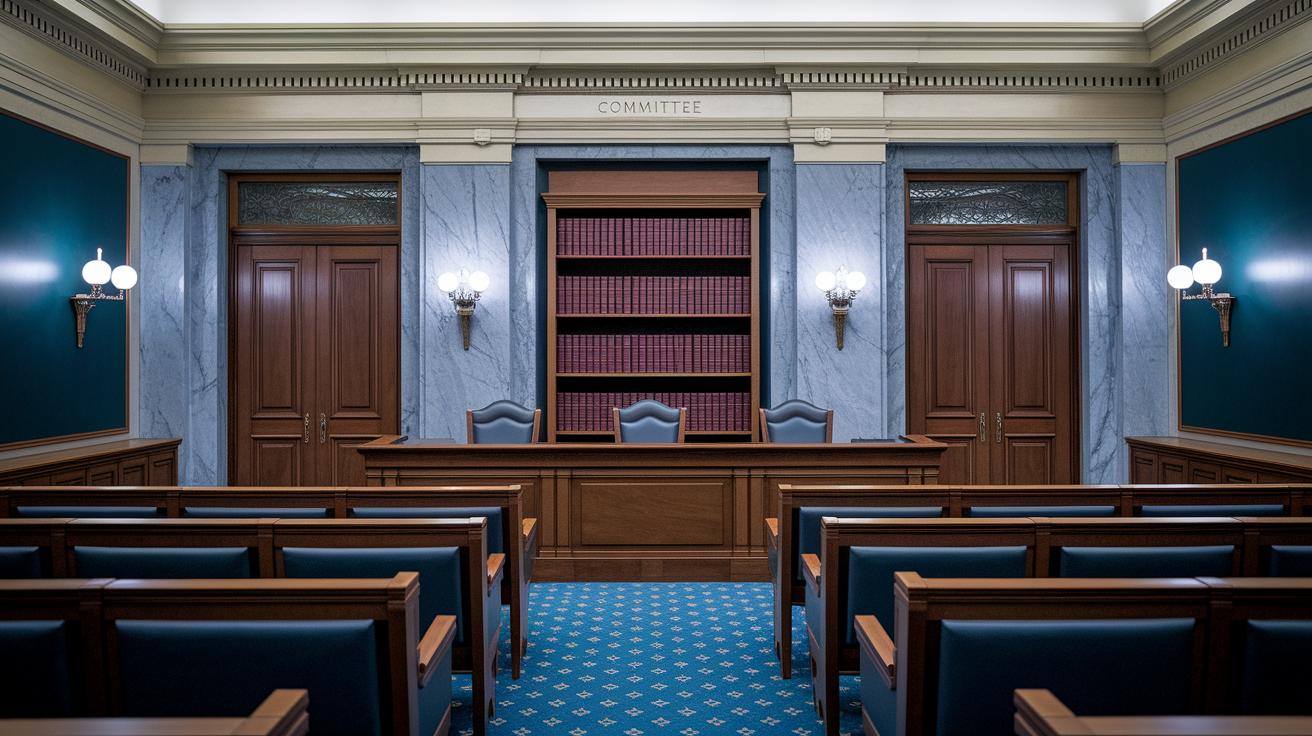
The Senate Foreign Relations Committee was established on April 10, 1816. It is one of the Senate's first standing committees. The group now meets in Room 419 at the Dirksen Senate Office Building and guides U.S. diplomacy. Today, Chair Senator Bob Menendez (D-NJ) and Ranking Member Jim Risch (R-ID) lead the committee during the 118th Congress. In simple terms, this committee was born in America’s early days and helped set the stage for modern international policy oversight.
The committee gets much of its power from the treaty ratification process in Article II, Section 2 of the U.S. Constitution. It reviews treaties to make sure they meet strict standards before a two-thirds vote in the Senate can ratify them. It also examines ambassador nominations. Senators check each nominee to be sure they can represent U.S. interests abroad, just like a quality control check before mass production.
The committee also oversees the State Department, USAID, and agencies like USIA. Through budget reviews and policy hearings, it guides executive branch diplomacy, sets priorities, and addresses global challenges. During budget hearings, experts share data that helps determine funding for international aid and development. This careful process keeps U.S. foreign policy effective and responsive in an interconnected world.
Evolution and Milestones of the Senate Foreign Relations Committee
The Senate Foreign Relations Committee started in 1816 when a resolution created it. Senator James Barbour led the new group. It quickly became an important body for U.S. diplomacy. In 1887, the committee joined the standing-committee system. This change helped shape its modern role in managing international policies.
Three key debates marked its history. In 1919, senators argued over the Treaty of Versailles. They questioned the heavy penalties and blame placed on the defeated nation. Their doubts led to the treaty not being approved. In 1945, the committee helped the United States approve the United Nations Charter. This step showed America's strong support for a new global order after World War II. In 1992, active hearings on NAFTA led to big changes in trade policy. Experts said these talks showed how trade deals could change domestic markets and global ties.
Today, the committee still reviews global security and economic agreements. It studies treaties and trade deals that affect U.S. interests around the world. This careful work helps the nation update its diplomatic and economic plans in a fast-changing world.
Jurisdiction and Powers of the Senate Foreign Relations Committee
The Senate Foreign Relations Committee still plays its key role in treaty approval. It follows Senate Rule XXV and now requires more evidence sharing and timeline tracking. Recently, witnesses even shared old records that connect current treaty language with earlier agreements. This change helps ensure deeper accountability before the full Senate votes, which needs two-thirds support.
The committee also beefed up reviews of ambassador and diplomat picks. It now uses a two-step process that checks both official credentials and hands-on experience abroad. For example, one candidate received an extra briefing on past overseas roles. This move makes the nomination process clearer and more responsible.
Oversight sessions have grown tougher too. They now include feedback from several agencies to review budgets for the State Department, USAID, and similar bodies. Senate practices now bring together budget details and performance scores during policy hearings, especially for trade and environmental talks. In one recent session, these combined insights helped shape funding choices, offering a more layered review than before.
Leadership and Membership of the Senate Foreign Relations Committee
The Senate Foreign Relations Committee has 21 members who serve for two years per Congress. The group includes 11 Democrats and 10 Republicans. Party leaders select its members to ensure balanced oversight of U.S. foreign policy.
A strong leadership team runs the committee's work on global issues. Chair Senator Bob Menendez (D-NJ) sets the main strategy, while Ranking Member Jim Risch (R-ID) provides a balancing perspective. Majority Vice Chair Chris Coons (D-DE) and Minority Vice Chair Todd Young (R-IN) also help guide discussions and actions. These clear roles boost effective negotiations overseas.
| Position | Senator | Party | State |
|---|---|---|---|
| Chair | Bob Menendez | D | NJ |
| Ranking Member | Jim Risch | R | ID |
| Majority Vice Chair | Chris Coons | D | DE |
| Minority Vice Chair | Todd Young | R | IN |
Senate Foreign Relations Committee: Inspiring Global Ties

Subcommittees break down big international issues into smaller, focused topics. They let members hone in on one subject at a time. One group might handle cyber issues while another works on trade and environmental challenges. This clear approach makes discussions smooth and helps shape strong U.S. foreign policies.
- Africa and Global Health Policy: This team tackles public health problems, epidemic responses, and fair health care in Africa.
- East Asia, the Pacific and International Cybersecurity: This group reviews digital security and online threats in a fast-changing region.
- Europe and Regional Security Cooperation: This unit works to strengthen U.S. alliances and security ties in Europe.
- Near East, South Asia, Central Asia and Counterterrorism: This committee keeps an eye on political changes and develops ways to fight terrorism.
- Western Hemisphere, Transnational Crime and Global Women's Issues: This group studies cross-border crime and supports women's rights around the world.
- International Development, Multilateral Institutions, Economic, Energy & Environmental Policy: This team sets policies on trade, energy safety, and global environmental commitments.
Each subcommittee helps set the full committee's agenda. Their detailed work builds a coordinated and strong U.S. diplomacy on the global stage.
Core Functions: Hearings, Treaties, and Nominations of the Senate Foreign Relations Committee
The committee leads important hearings on global issues, foreign aid, and how well agencies perform. It now relies on expert testimony and a faster review process built on earlier talks about its role and powers.
- Executive negotiation
- President submits treaty
- Committee hearing with expert input and improved review methods
- Committee vote on advice and consent
- Two-thirds Senate floor vote
The committee also sharpens its method for checking diplomatic nominees. After the White House sends a nominee, a focused hearing reviews the candidate's background with new criteria before a committee vote sends the nomination to the Senate for a final decision.
Criticisms and Reform Proposals for the Senate Foreign Relations Committee
Critics say the committee often gets bogged down by party fights. These clashes slow down treaty votes that shape U.S. diplomacy. Recently, disagreements have delayed the review of sensitive treaties, leaving the nation waiting for important choices. Some minority members find it hard to join subcommittee work, and their voices often go unheard. The public rarely sees these meetings, which has sparked more calls for change.
Reform ideas aim to boost transparency, accountability, and speed. One suggestion is to require livestreams for all committee hearings so the public can watch decisions in real time. Another idea sets fixed deadlines for treaty actions and nominations to cut delays. A final proposal recommends adding more resources for minority staff to ensure balanced reviews and richer policy discussions. Altogether, these changes could lessen delays and bring more views into U.S. foreign policy decisions.
Final Words
In the action, we explored how the senate foreign relations committee directs US diplomacy through treaty review, ambassador confirmation, budget oversight, and subcommittee work. Key historical milestones and structural functions highlighted its vital role in shaping foreign policy. We also examined criticisms and reform proposals meant to boost transparency and efficiency. This summary offers a clear understanding of the committee's impact on both global security and market-moving developments. Overall, the outlined events point to a robust framework that continues to drive positive change in international affairs.
FAQ
What is the Senate Foreign Relations Committee?
The Senate Foreign Relations Committee is a Senate body established in 1816 that shapes U.S. diplomacy by reviewing treaties, confirming ambassadorial nominations, and overseeing State Department and USAID budgets.
When was the Senate Foreign Relations Committee established and how has it evolved?
The Senate Foreign Relations Committee was founded in 1816 and later formalized in 1887. It has since overseen key treaties like the Treaty of Versailles and the UN Charter, shaping modern international agreements.
What powers does the Senate Foreign Relations Committee hold?
The Senate Foreign Relations Committee holds the power to review treaties requiring a two-thirds Senate vote, confirm ambassadorial appointments, offer budget oversight for foreign policy agencies, and advise on war and international agreements.
Who currently leads the Senate Foreign Relations Committee?
The Senate Foreign Relations Committee is led by Chair Senator Bob Menendez (D-NJ) with Ranking Member Jim Risch (R-ID) and includes 21 members from both political parties assigned by party leaders and steering committees.
How is the subcommittee structure organized within the Senate Foreign Relations Committee?
The Senate Foreign Relations Committee divides its workload among six subcommittees, each tasked with regional or thematic issues such as global health, cybersecurity, regional security, counterterrorism, transnational crime, and international economic policies.
What are the core functions of the Senate Foreign Relations Committee?
The Senate Foreign Relations Committee conducts oversight hearings on global issues, reviews negotiated treaties through a multi-step process, and evaluates diplomatic nominations before they reach the full Senate for confirmation.
What criticisms and reform proposals target the Senate Foreign Relations Committee?
Critics note issues like partisan gridlock and limited minority input, while reform proposals suggest livestreaming hearings, setting deadlines for action, and increasing minority staff resources to boost transparency and efficiency.