

What if Earth's past holds clues about our climate future? Early scientists laid the groundwork for today's climate debates. They noticed that layers in our air can trap heat (a natural warming effect) and recorded a steady rise in carbon dioxide levels. Each discovery adds a piece to the puzzle of our planet's story. This post highlights the key moments that shaped our view of climate change. Let's explore these findings and see how they guide our efforts to tackle a warming world.
Milestones in the History of Climate Change Research
- In 1824, Fourier suggested that Earth's air layers trap heat. Think of it like a greenhouse warming a garden on a chilly day.
- In 1896, Arrhenius calculated that doubling carbon dioxide (CO₂) could raise temperatures by about 5-6 °C. His work was a key step in linking human actions to climate change.
- In 1938, Callendar found that industrial activity may have raised temperatures by roughly 0.3-0.6 °C. This hinted that burning fossil fuels could warm our planet.
- In 1958, the Keeling Curve began measuring CO₂ continuously. The data clearly showed that levels of carbon dioxide in the air have been steadily rising.
- In 1967, scientists built the first global computer climate model. This tool helped them simulate how Earth might react to more greenhouse gases.
- In 1985, ice-core studies in Antarctica revealed a strong connection between CO₂ levels and temperature. That same year, discovering the ozone hole showed us more holes in our atmosphere.
- In 1988, experts and policymakers came together to form the Intergovernmental Panel on Climate Change (IPCC) to share new findings.
- In 1990, the first IPCC Assessment Report brought together important data and methods used to track global temperature trends.
- In 1994, the United Nations Framework Convention on Climate Change was adopted, sparking a worldwide effort to tackle changing climate patterns.
- In 1997, leaders agreed on the Kyoto Protocol, which set rules to reduce greenhouse gas emissions.
- In 2008, the UK Climate Change Act was passed to cut emissions and steer national policy.
- In 2015, the Paris Agreement was established to keep global warming under 2 °C above pre-industrial levels.
- In 2021, projections warned that hitting a 1.5 °C rise by 2040 might push us to act swiftly on climate issues.
Ancient Climate Records and Pre-Industrial Climate Change
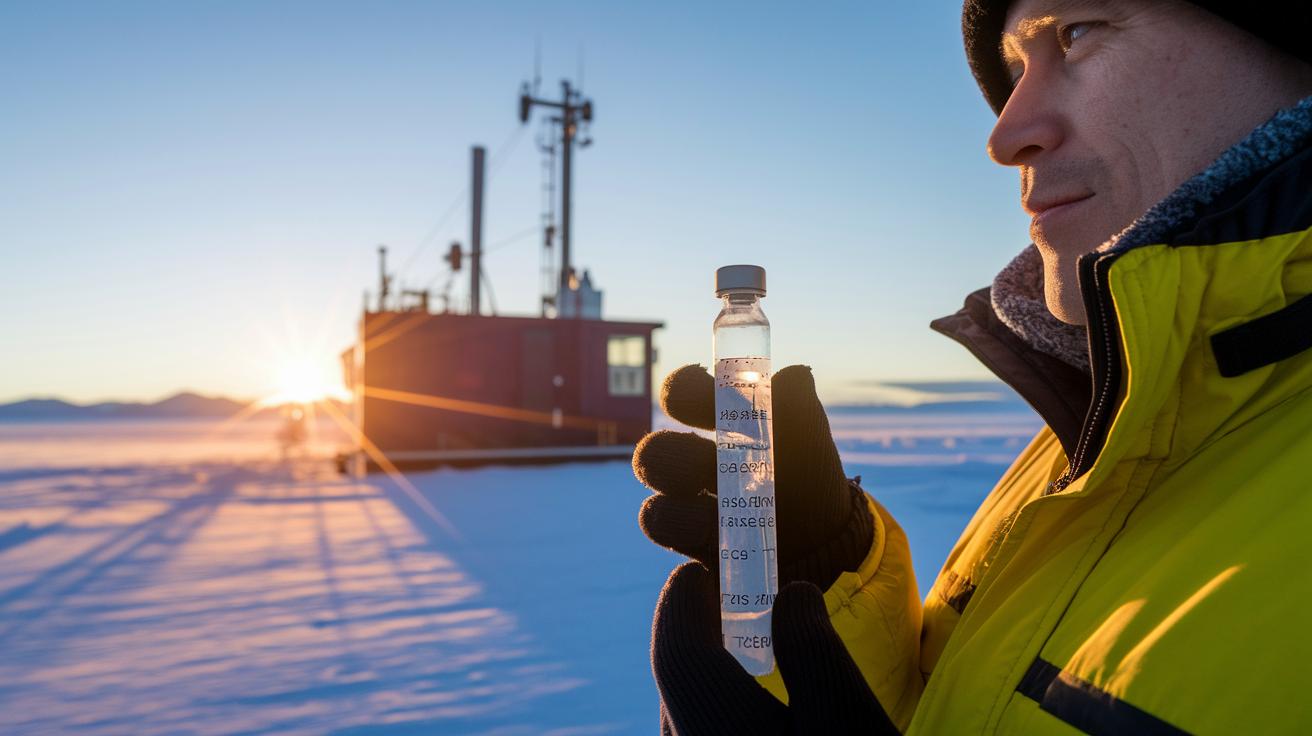
Ancient climate records give us a clear look at Earth's past. Ice cores from Antarctica show us nearly 150,000 years of data, revealing bright details about cold and warm periods. These records explain climate changes that happened long before modern industry. Scientists use paleoclimatology (the study of past climates) to examine these shifts with tools like tree rings and the chemical layers in ice. Tree rings, for example, tell us about past temperatures and rainfall.
Studies clearly show shifts between ice ages and lighter periods. The Medieval Warm Period (950 to 1250 AD) and the Little Ice Age (1300 to 1850 AD) are examples of times with strong climate changes that affected people and nature. These cycles mark the natural ups and downs of our planet. Researchers say that repeated cold and warm periods show Earth's steady rhythm. Ongoing research in paleoclimatology helps us set a base for understanding today's climate changes, as we learn more from these natural patterns over many thousands of years.
Pioneering Discoveries in Climate Change Science
In 1824, Fourier presented a theory on how the atmosphere traps heat. His idea set the stage for later climate models.
In 1896, Arrhenius created equations that linked a doubling of carbon dioxide (CO₂) to a 5–6 °C temperature increase. His work was like testing an early calculator: doubling CO₂ raised the temperature noticeably.
In 1938, Callendar used statistical methods to show that industrial activity likely bumped up temperatures by 0.3–0.6 °C. This analysis added solid proof to earlier theories.
Early calculations on radiative forcing (measuring energy shifts in the atmosphere) laid the groundwork for modern studies. Later, researchers improved these methods by carefully checking humidity and temperature data. Their work paved the way for the detailed climate models we use today.
Mid-Century Advances in Climate Measurement and Modeling

Charles David Keeling changed our view of the climate in 1958. He started the Keeling Curve, a long-term record of carbon dioxide levels. His work showed that human actions were steadily raising CO₂ in the air, turning climate ideas into proof.
In 1967, scientists created the first global climate model. This computer simulation predicted that doubling carbon dioxide in the air could warm the planet by about 2 °C. It made clear that even small tweaks in greenhouse gases (gases that trap heat in the atmosphere) could lead to big changes in temperature.
A year later, in 1968, John Mercer warned that a continuous rise in temperature might cause the Antarctic ice sheet to collapse. His warning raised concerns that sea levels could change dramatically, affecting both landscapes and people.
In 1969, the Nimbus III satellite took off. This new tool let scientists track temperatures around the globe with much better precision, showing them daily changes in our climate.
| Event | Year |
|---|---|
| Keeling Curve starts tracking CO₂ | 1958 |
| First global climate model built | 1967 |
| Warning of Antarctic ice collapse | 1968 |
| Nimbus III satellite maps temperatures | 1969 |
These breakthroughs turned ideas into facts, giving us a clearer picture of our warming planet.
International Collaboration and Policy in Climate Change History
Scientific studies moved work from isolated projects to global teamwork. Early research sparked a chain reaction of legal and political changes. These findings gave governments the proof they needed to create rules that curb emissions and hold companies responsible.
As time passed, lawmakers updated international deals and national rules to match the urgent messages of climate research. This shift turned early warnings into firm legal actions. For example, when a major study revealed the dangers of unchecked emissions, officials quickly turned that evidence into new regulations. This change has transformed how countries protect the climate.
The growth of environmental policy shows a stronger bond between scientists and lawmakers. Global agreements and national laws based on solid research continue to evolve, keeping rules in line with new climate science.
Recent Technological and Scientific Advances in Climate Change History
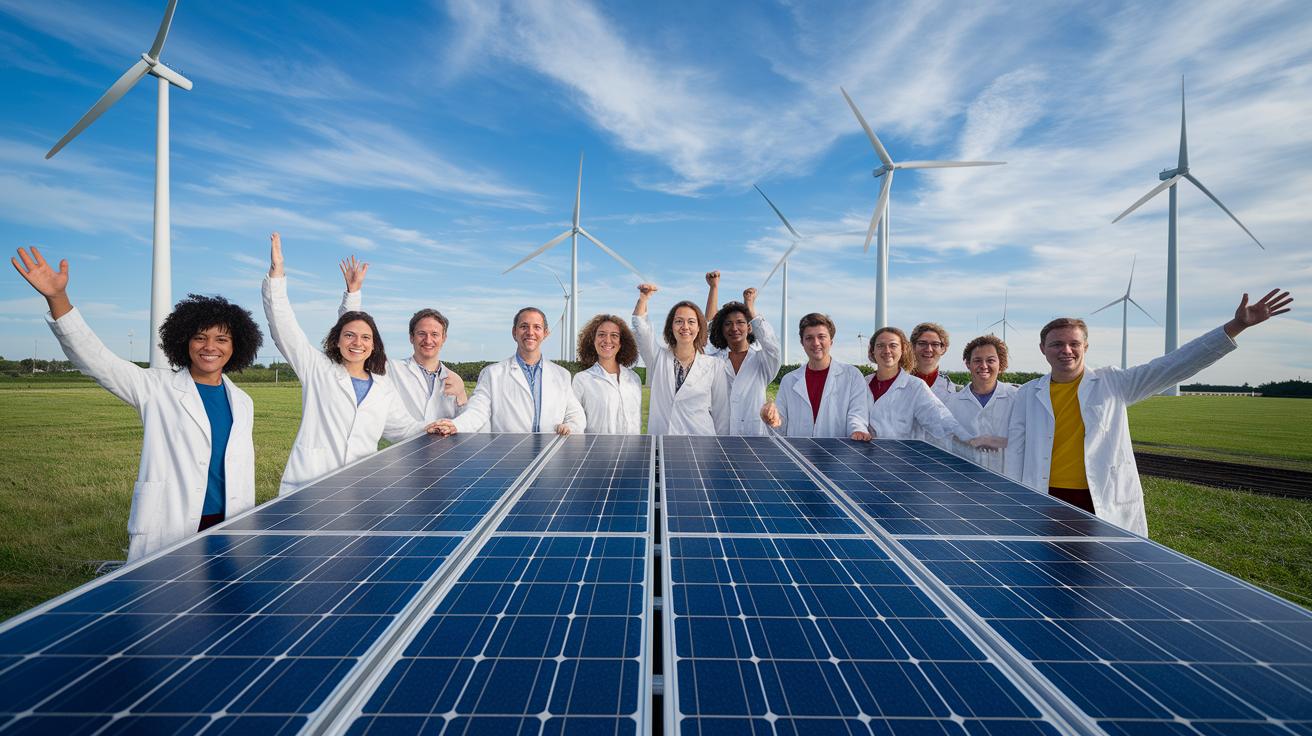
In 1954, scientists rolled out the first practical solar cell, which turns sunlight into electricity efficiently. This innovation sparked the renewable energy revolution and helped lower our reliance on fossil fuels.
In 1985, Professor Akira Yoshino developed the lithium-ion battery, a key break in energy storage. This battery quickly powered portable devices and electric vehicles, proving vital in today's energy systems.
In 1991, Cornwall saw its very first wind farm open. The farm generated enough power for about 2,700 homes, showing how wind energy can support a country's power needs.
In 1996, the first carbon-storage project started to keep carbon dioxide (CO₂) from entering the air. A year later, in 1997, Toyota released the Prius hybrid. This car combined fuel efficiency with lower emissions, setting a new trend in the auto industry.
In the early 2000s, climate change became more obvious. A 2003 heatwave in Europe was linked to rising temperatures, and by 2007, evidence showed that polar regions were warming twice as fast as other areas, raising concerns about quicker ice loss.
In 2019, scientists warned that ice-sheet collapse might be irreversible. Then in 2020, Oxford PV set a record with a solar conversion rate of 29.52%. Projections from 2021 suggest that reaching a 1.5 °C warming threshold may soon be hard to avoid.
Final Words
In the action, we tracked the history of climate change from early theories to modern policy and innovation. The timeline noted breakthroughs like Fourier's early ideas, Arrhenius's estimates, and the Keeling Curve paving the way for the Paris Agreement. It also covered paleoclimatology evidence that shaped current research and measurement practices.
Each phase showcases how science and policy work together for a more informed, hopeful future. This clear history of climate change inspires progress.
FAQ
Q: What is the brief history of climate change?
A: The brief history of climate change starts with early theories like Fourier’s 1824 proposal, moves through Arrhenius’s 1896 CO₂ calculations and the Keeling Curve of 1958, and evolves to modern international agreements such as the Paris Agreement.
Q: Is the Earth warming faster than it ever has in history?
A: The inquiry about Earth’s warming highlights that modern data shows accelerated temperature rises, with projections indicating that critical warming thresholds may be reached sooner than in past climates.
Q: What did Stephen Hawking say about global warming?
A: Stephen Hawking warned that unchecked global warming could lead to severe environmental impacts, stressing the urgent need for drastic measures to prevent potentially disastrous global conditions.
Q: Why is 2030 the point of no return?
A: The reference to 2030 stems from studies suggesting that if significant climate mitigation efforts are delayed until after this year, it may become increasingly difficult to reverse or halt the most damaging effects of global warming.
Q: What are the major milestones in climate change research?
A: The milestones include early theoretical work by Fourier, Arrhenius’s CO₂-temperature estimates, continuous CO₂ measurements from the Keeling Curve, the first global climate models, and key policy strides like the Kyoto Protocol and Paris Agreement.