
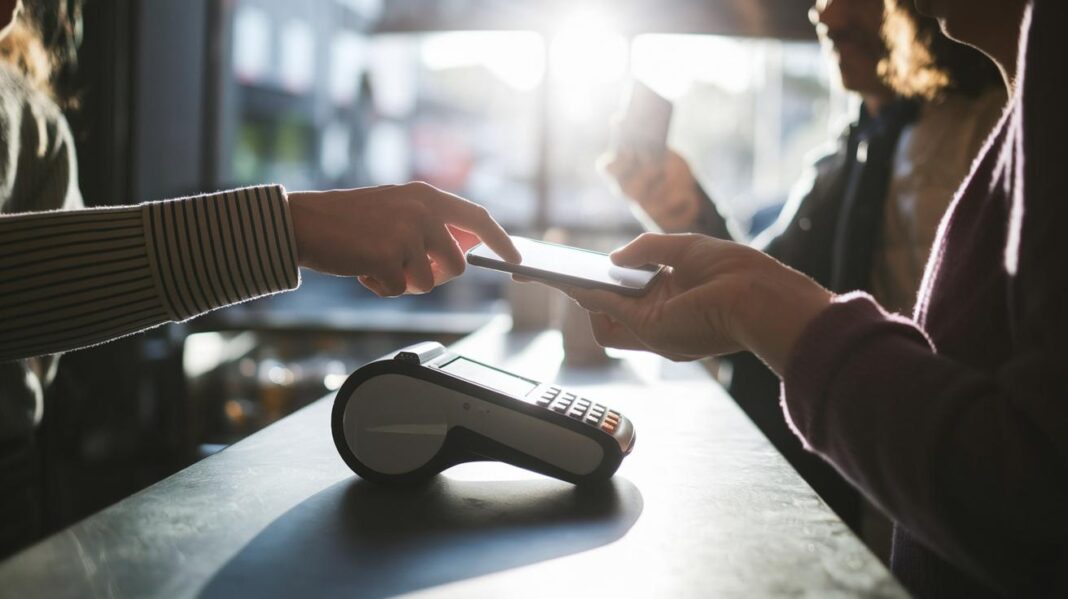
Ever wonder how one quick tap can speed up your day? Contactless payments replace cash and cards with near-field communication (a tech that lets devices share data when they touch) for faster, safer transactions. This method cuts waiting times and lowers fraud risk by using short, secure token exchanges. Read on to learn how tapping at checkout can boost your daily efficiency and simplify your routine.
Understanding Contactless Tech Fundamentals
NFC works when you tap a phone, wearable, or card close to a reader. The reader sends a low-power radio signal to wake the chip in the device. Once active, the chip makes a one-time encrypted token that takes the place of your real account data. This means you do not need to enter a PIN or sign at checkout. A simple tap starts the transaction almost immediately, cutting down the wait time of older methods.
After the chip activates, the token goes through several security checks before it reaches payment networks like Visa, Mastercard, American Express (AMEX), or Discover. This tokenization step makes sure no real account details travel over the network. It helps protect your information from threats. In just a few seconds, fraud detection systems check the token by looking at the purchase amount, location, and available funds. A 2024 study showed that 38% of consumers see NFC payments as very secure because of these extra protection steps and fast processing.
- Speed of checkout: Transactions finish in seconds, reducing wait times.
- User convenience: The process is simple with no need for PINs or signatures.
- Robust security: Multiple layers of encryption and unique tokens protect account details.
Protocols and Standards Powering Contactless Tech
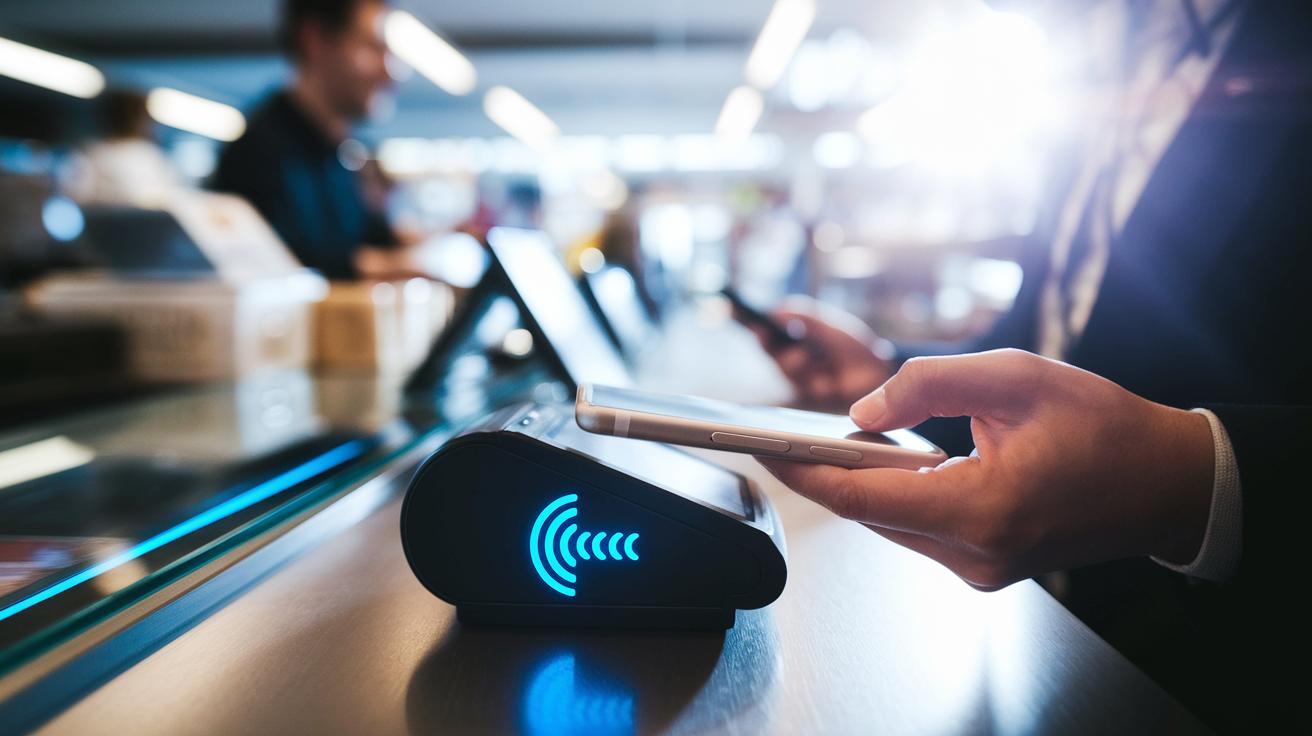
Contactless technology works with EMV chip card standards and near-field communication (NFC) that runs at 13.56 MHz. Phones, cards, and wearables use secure chip systems for everyday payments. These systems follow rules for data encryption that meet industry standards. For instance, they use EMV specifications to build a trusted channel for fast transactions.
When a user taps an NFC-enabled device, it creates a one-time encrypted token in place of actual account details. The device and reader then set up several layers of encryption to generate a secure, temporary code. This process follows strict rules to keep sensitive information hidden. In one test, a phone’s layered encryption completed a secure handshake in less than a fraction of a second, proving both speed and security.
Payment networks then check the token against EMV standards. They review the transaction details, including the amount and location, and confirm available funds before approval. This quick, technical check helps support secure, high-speed commerce every day.
Security Frameworks That Protect Contactless Tech Transactions
Banks and payment networks use smart algorithms to check every transaction for fraud. They look at the purchase amount, account status, location, and time. They run over 100 checks and give a risk score within minutes. This score helps spot unusual patterns and possible fraud early. By reviewing each detail, these systems build trust for both shoppers and sellers. They also keep an eye out for odd activity, which reassures everyone.
Hardware security is also important. Contactless cards and devices send data only when they are close to a reader (about 4 centimeters away). This short range lowers the chance that someone can intercept the signal. Tokenization (a process that replaces real account details with a temporary code) adds another layer of protection during data exchanges. This setup cuts down the risks of long-distance capture and cyber skimming. Forcing the device to be near the reader makes it harder for unauthorized people to steal or copy a transaction.
Many layers of encryption keep each transaction safe. Each payment uses a unique token code to stop sensitive details from being exposed. Data is encrypted as it travels through secure channels to the payment network for approval. Trusted third-party services help integrate the system smoothly while reducing risks. Together, these measures form a strong security framework that makes contactless payments a reliable option. Each encryption layer acts as a barrier against online threats. If one layer fails, the others continue to protect user information.
Implementation Strategies for Contactless Tech in Businesses
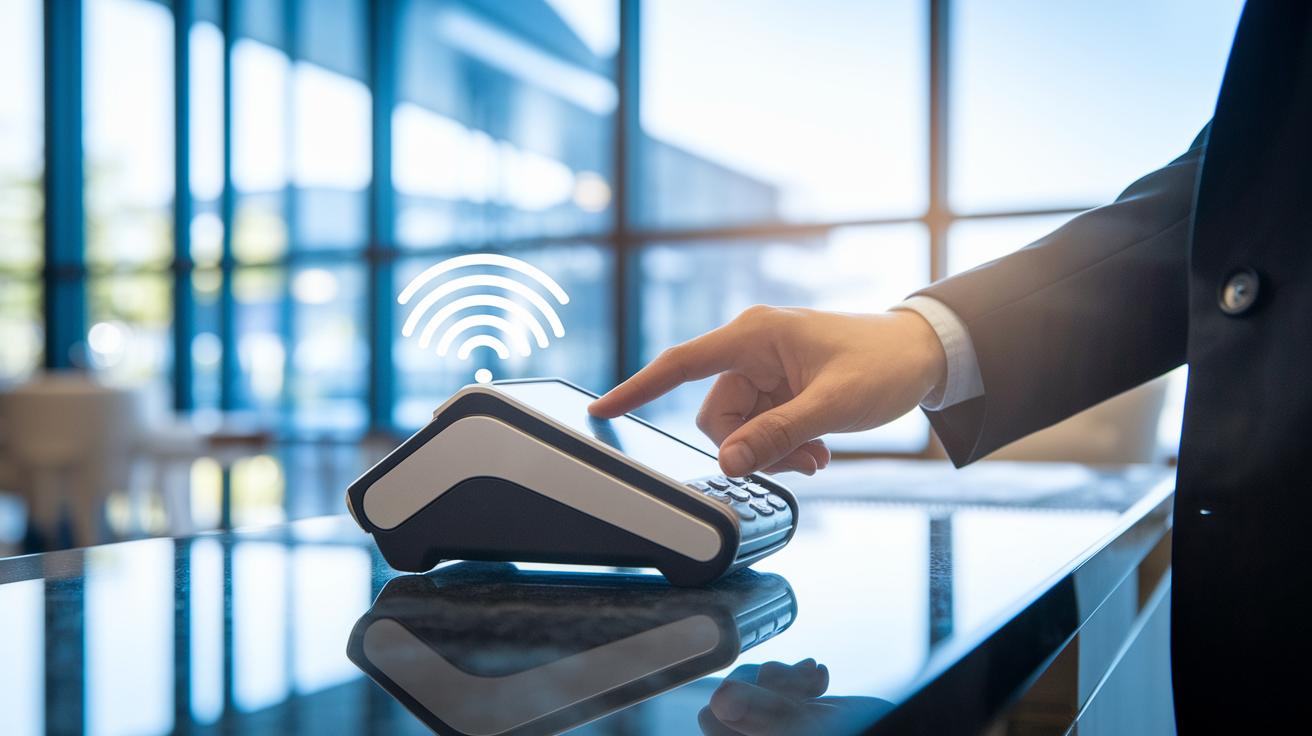
Businesses can boost their payment systems without needing to buy new hardware. Service providers can reprogram many payment terminals so they work with contactless payments. That means a virtual terminal, a mobile reader, or even a smart countertop POS might only need updating for tap-to-pay methods. Retailers can update systems to support devices that use NFC (near-field communication, a short-range wireless system) to speed up and secure transactions.
By teaming up with experienced payment service providers, companies can use all-in-one solutions that cover merchant underwriting, residual management, automated onboarding, and marketing automation. For example, a small retailer might update current devices instead of spending on brand-new equipment. Bigger businesses can also connect various systems, like dual-screen setups or wearables, through one central merchant portal. This central hub makes it easier to track sales and manage everyday tasks while reducing wait times for customers.
More than 235,000 devices have already been connected using trusted third-party services such as NMI. This approach works well for both mobile wallet integration and cashless setups across different device types. Using existing equipment with fresh software updates helps retailers boost efficiency and customer satisfaction without heavy capital expenses.
| Device Type | Integration Steps | Hardware Requirements | Key Benefit |
|---|---|---|---|
| Virtual Terminals & Mobile Readers | Reprogram software, update settings, and test contactless features | Existing hardware with a software update | Cost-effective upgrade |
| Smart Countertop POS & Dual-Screen Systems | Install firmware updates and sync with a merchant portal | Network-ready and NFC-compatible devices | Better customer experience |
| Wearables & Mobile Devices | Turn on mobile wallet features and connect with backend systems | Built-in NFC chip with wireless connectivity | More mobility and flexibility |
Contactless Tech: Boosting Everyday Efficiency
Contactless technology like NFC (Near Field Communication) and RFID (Radio Frequency Identification) helps with secure access, event ticketing, and quick data exchanges. Offices now let workers enter secured areas by simply tapping their phone or wearable device. At events, ticket verification happens with a tap, allowing guests to skip long lines. Imagine a conference where your digital business card is exchanged instantly when you tap your phone on a reader. These systems exchange encrypted signals over a short range, which keeps data safe and the process smooth. This method cuts down on manual checks and errors, making daily interactions faster and more secure.
Retailers and service providers also use contactless tech to boost customer service and streamline operations. Stores now offer tap-to-pay systems that connect purchases to reward programs so customers get benefits right at checkout. Self-service kiosks with barcode scanning help shoppers quickly use offers and update membership accounts. Merchant portals track real-time sales and inventory, letting businesses adjust operations on the fly. This mix of customer-friendly features and back-end monitoring improves efficiency, reduces waiting times, and delivers a smoother overall experience.
Enhancing User Experience in Contactless Tech Interfaces
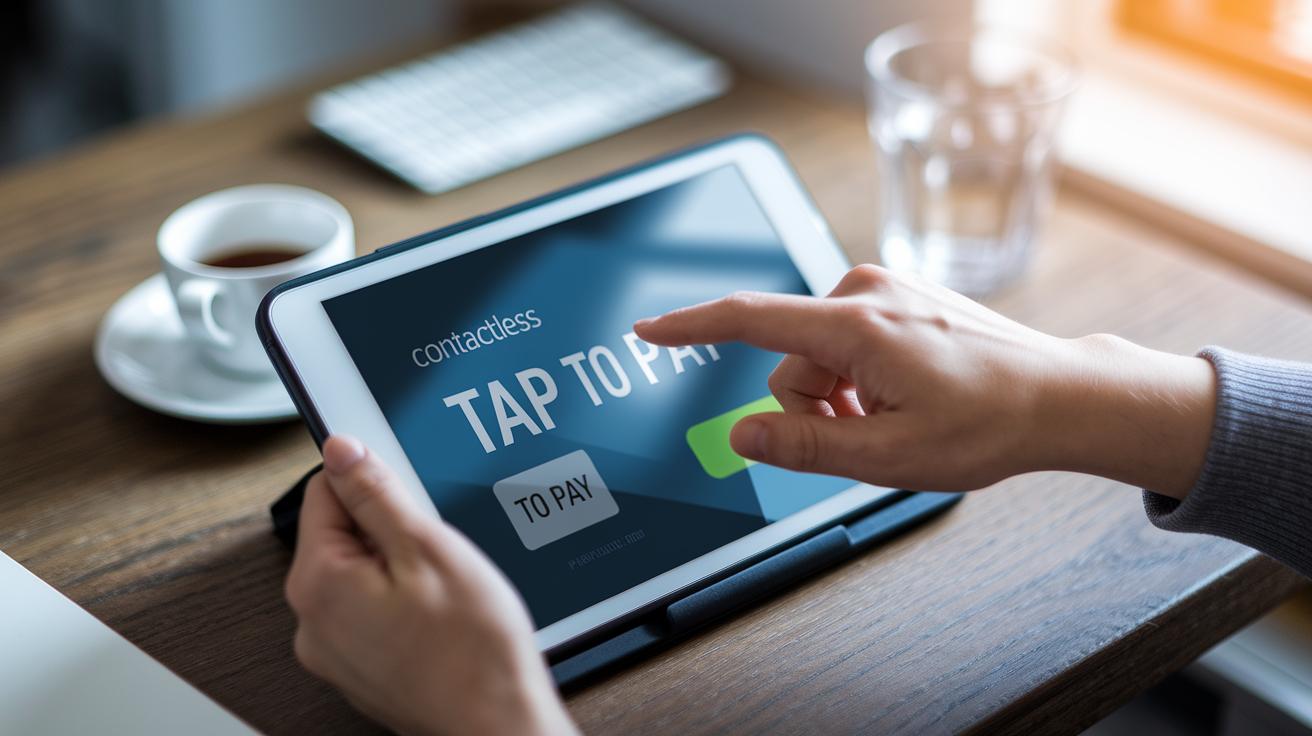
Interface design in contactless technology focuses on clear layouts and easy prompts that guide users at every step. Designers use simple displays with big action buttons and clear instructions to cut confusion. For example, one screen might say "Tap to Pay" and then remind users to tap the icon and follow on-screen directions. Features like adjustable text size and high-contrast visuals help everyone navigate the system easily.
The design also builds in error handling to keep issues brief. If something goes wrong, a simple message like "Try again" appears along with a quick guide on what to do next. These features work together to lower the need for troubleshooting so users can finish transactions with less delay and more confidence.
Future Growth and Market Trends in Contactless Tech
Chase launched new Visa credit cards with contactless features in Q2 2019 and planned to add them to debit cards soon after. Today, more than 235,000 devices are connected, proving the strength of this market. Mobile wallets are growing as digital card features improve and consumer trust increases. This shift means that contactless payments are cutting checkout times and making payments easier for everyday use.
Experts expect contactless transactions to grow by double digits through 2025. This growth is driven by expanding mobile financial services and innovative NFC (near-field communication) features. More card issuers and enhanced digital card technology will boost the wireless payment market. As businesses and consumers adopt these tools, contactless payments are set to become a key part of daily financial transactions and routine retail operations.
Final Words
in the action, we walked through how contactless tech works, from NFC basics and tokenization to robust security measures and seamless integration.
The article outlined device implementations, various use cases, and market trends driving adoption. Emphasis was on how contactless tech removes friction, boosts speed, and keeps transactions secure.
This evolving field offers great potential for businesses, users, and innovation across industries. The future remains bright, with progress paving the way for smarter and safer experiences.
FAQ
What is contactless technology?
Contactless technology means using near field communication (NFC) to make secure payments or data exchanges without physical contact. The chip in a card, phone, or wearable activates when tapped near a reader.
What technology is commonly used for contactless payments?
The common technology used is NFC, which sends a low-power radio signal that activates a chip. This chip generates encrypted, one-time tokens that help secure each transaction.
Is contactless technology RFID or NFC?
Contactless technology primarily uses NFC, which is specifically designed for secure transactions. Unlike RFID, NFC involves encryption and works over very short distances to protect users’ data.
What is an example of a contactless payment?
An example is tapping an NFC-enabled card, phone, or wearable at a payment reader. This quick process sends an encrypted token used to authorize the transaction securely.
How do contactless payment methods work on phones or cards?
Contactless payment methods work by tapping a card, phone, or wearable near a reader. The reader sends a radio signal that triggers the device’s chip to create an encrypted token for quick transaction approval.
What is a contactless tech app?
A contactless tech app is a mobile application that uses NFC to enable tap-to-pay functions, digital wallet capabilities, or secure access. This streamlines transactions by removing the need for physical contact.
How is contactless technology used in hospitality?
In hospitality, contactless technology is used for digital check-ins, contactless payments at restaurants, and room access control. These applications enhance guest convenience and speed up service without physical interaction.
Are there dangers of contactless cards?
While contactless cards use encryption and tokenization to secure payments, there is a slight risk of data theft if a malicious reader attempts skimming. Users are advised to monitor their accounts for any irregular activity.