

Is our economy stronger than you think? We use economic data to gauge how well the nation is doing. This data helps investors and decision-makers plan wisely. Economic indicators act like signposts that show changes in areas such as manufacturing and jobs. By examining leading, lagging, and current figures, we catch early signals of growth and change. This insight drives smart choices and improves market outcomes. Read on to see how these factors shape trends and offer a clearer view of shifts in the market.
Economic indicators spark positive market insights
Economic indicators are measurable signs that reveal a country's economic health. They assist businesses, investors, and policymakers in tracking changes and spotting trends. These indicators come in three types: leading, lagging, and concurrent. Each type shows a different part of the economic cycle.
Market experts use these measures to plan their next moves. As the economy shifts, knowing what each indicator means helps in making smart policy and business decisions.
Leading indicators show what might happen next. For example, before the economy experiences major growth, key sectors like manufacturing often start to pick up orders.
Lagging indicators confirm trends by reflecting what has already happened. Take the unemployment rate, which typically goes up only after the economy has slowed down.
Concurrent indicators provide real-time data. Stock market movements, for instance, mirror investor moods and the current state of the economy.
Together, these categories help analysts combine forecasts with live market readings, leading to a clearer view of economic trends.
Gross Domestic Product: Measuring Economic Growth
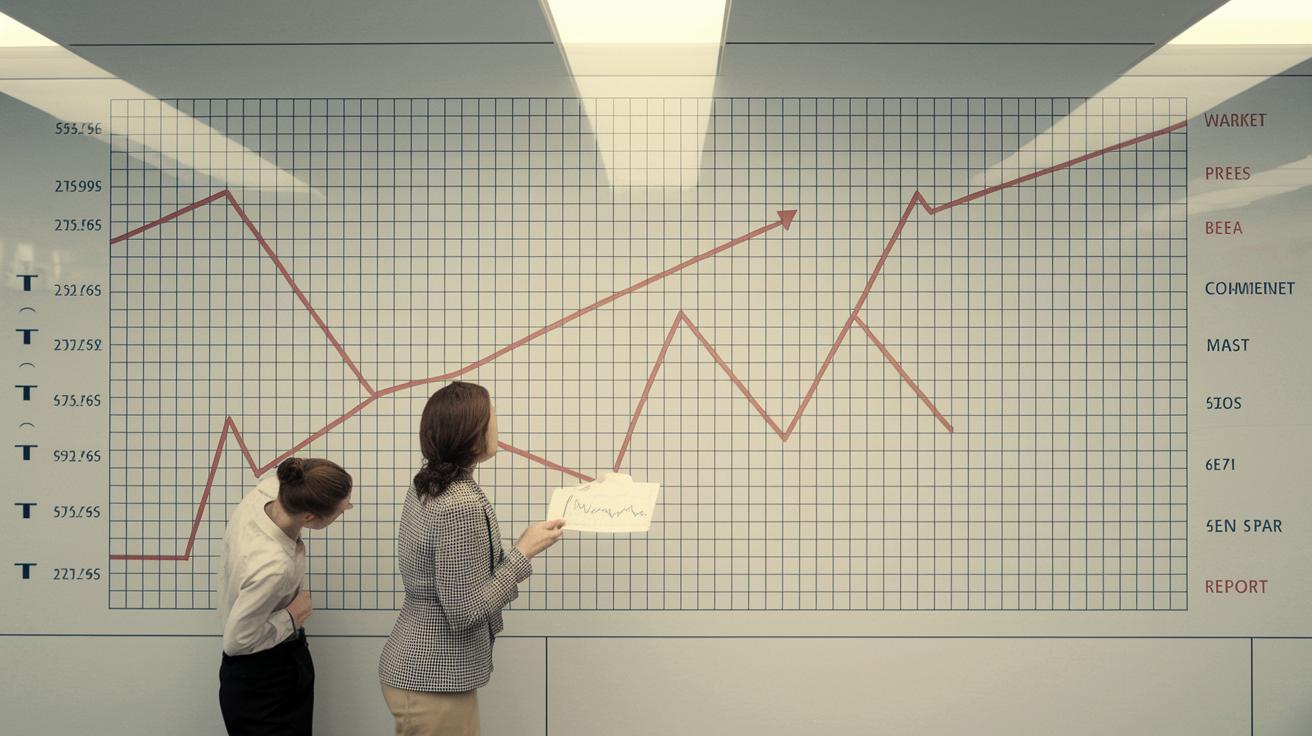
GDP tells us how much a country produces in goods and services. This measure shows the overall health of an economy. The Bureau of Economic Analysis (BEA) publishes these figures every quarter to help investors and leaders adjust to changes. GDP is given in two forms: one using current prices and one that removes inflation.
Nominal GDP
Nominal GDP is measured using market prices at the time. It shows how much money the economy makes without taking inflation into account. This means if prices rise, nominal GDP might go up even if production stays the same. Many people assume a rising nominal GDP always means more production, but it can sometimes hide the real impact of inflation on growth. This calculation helps compare different time periods, though it may not show true growth.
Real GDP
Real GDP removes the effects of inflation so we can see the true increase in production. It adjusts the numbers to constant prices for a clearer view of economic growth. For example, when prices rise fast because of inflation, real GDP will show slower growth than nominal GDP. Experts rely on this measure to make better comparisons over time and plan future investments.
Inflation Trends and the Consumer Price Index
The Consumer Price Index (CPI) is a key tool that shows how prices change over time. Every month, the Bureau of Labor Statistics (BLS) reports the CPI. It measures price shifts for a fixed group of items that urban consumers usually buy. This group includes food, travel, housing, clothes, health care, and fun activities. Rising grocery bills or higher gas prices are everyday examples of what the CPI tracks. This information helps government officials, business leaders, and families understand price changes and check our economic stability.
Each monthly CPI report gives a quick look at how living costs are changing. When the CPI goes up, it means everyday items are getting more expensive, which can strain family budgets. If the CPI stays the same or drops, it suggests that prices are steady. Experts use these monthly numbers to understand inflation pressures and update their economic plans. For instance, if housing or travel costs suddenly rise, families may need to adjust how they spend to cover basic needs.
Unemployment Rate and Labor Market Dynamics

The unemployment rate shows the percentage of people looking for work but unable to find a job among the civilian labor force. It leaves out farm workers and active military members so we can focus on regular job markets. People use this number to see how the economy is doing; higher numbers can signal a slowdown, while lower numbers hint at better conditions. Simply put, the unemployment rate is the share of those actively seeking work and not finding it.
Every month, the Bureau of Labor Statistics releases nonfarm payroll data on the first Friday. This report counts how many jobs are added or lost, ignoring sectors like farming that follow seasonal trends. Regular updates let experts see monthly changes and understand how businesses manage their workforces. For example, a quick drop in new jobs can mean companies are cutting back after a broader economic shift.
Labor market data can take time to change. Businesses often wait to hire or lay off workers until they see clear shifts in the economy. This delay means other indicators might hint at trends first, and the unemployment rate confirms those trends later.
Leading Indicators and Composite Indexes
Leading indicators in economics are early warning signs that show future changes. They collect initial data from different sources, giving a peek at what might happen next. Investors and business leaders use these signals to plan before larger trends appear.
A key example is the Conference Board’s Composite Leading Indicator (CLI). The CLI collects information like interest rate spreads, new manufacturing orders, and weekly jobless claims. When the CLI rises above its baseline, it usually means the economy is growing. When it drops below, it can signal a slowdown. For example, rising new orders and fewer jobless claims may hint at future growth. This mix of data paints a clearer picture than one measure alone.
Companies watch the CLI closely to guide their decisions. Its monthly updates help businesses adjust budgets, staffing, and inventory by catching turning points early. If the CLI stays above its baseline, many firms invest more or increase output, trusting the positive signal. Using these early market clues helps organizations stay ahead of shifts and fine-tune their strategies.
Concurrent Economic Measures: Business Sentiment and Market Signals

Real-time indicators let us see how the economy works each day. Tracking these numbers reveals current market conditions and shifts in both consumer and business activity. Daily updates help leaders spot changes early so they can adjust their plans.
Business Confidence Index
The Business Confidence Index gathers survey answers from business leaders about production, orders, and inventory. It offers a quick look at how these leaders judge current operations and future trends. Companies from many sectors share their views, which means the index covers a wide range of activities. By reading these responses, analysts can tell if optimism is growing and if the economy might change. For example, if many leaders report strong future plans, it may lead to more investments and strategy changes.
Stock Market Performance
Major stock indexes like the Dow Jones and S&P 500 deliver daily numbers that mirror investor sentiment. These figures often move with overall economic trends and react in real time to market events. They can reflect shifts in consumer confidence and global financial conditions. Investors depend on these signals to adjust their portfolios and foresee trends. When the indexes rise, it may point to growing optimism; when they fall, caution may be in order. Watching these indexes is a key way to understand the pulse of economic activity.
Key Data Sources and Release Calendars for Economic Indicators
Market players depend on regular data to see trends and decide their next steps. Both government and private sources stick to fixed schedules when they release important numbers. This helps investors, analysts, and businesses prepare for sudden changes.
For instance, the Bureau of Economic Analysis (BEA) publishes GDP figures every quarter. The Bureau of Labor Statistics (BLS) offers monthly readings for the Consumer Price Index (CPI) and nonfarm payrolls. In addition, the Conference Board releases consumer confidence data each month, and the Federal Reserve holds Federal Open Market Committee meetings several times a year. Tracking these dates is essential for anticipating market movements.
| Indicator | Issuing Agency | Frequency | Typical Release Date |
|---|---|---|---|
| GDP | BEA | Quarterly | End of Quarter |
| CPI | BLS | Monthly | Mid-Month |
| Nonfarm Payrolls | BLS | Monthly | First Friday |
| Consumer Confidence | Conference Board | Monthly | Last Tuesday |
| FOMC Meeting | Federal Reserve | 8 Times/Year | Varies |
Using these calendars helps analysts and business leaders get ready. Being aware of these dates allows them to make smart decisions and quickly adjust when official data shows a shift in the economic landscape.
Applying Economic Indicators to Forecasting and Policy Decisions

Analysts mix three types of economic signals: early warnings (leading), confirmation signals (lagging), and real-time data (concurrent). They watch for quick clues like more new orders or changes in the stock market. Then they compare these with slower updates like unemployment rates. For instance, a spike in manufacturing orders can hint at growth, while a later rise in unemployment may show a pending slowdown. Before big growth, industries often see a burst of orders. These signals help forecasters draw a clearer picture of both recessions and expansions.
The Federal Reserve reviews key numbers such as GDP growth, inflation rates, and unemployment figures. These figures help the central bank decide on interest rates. If GDP slows or inflation rises quickly, the Fed might lower or raise rates to keep the economy steady. This method allows for careful, data-based policy choices that aim to prevent sudden economic swings.
Businesses also use these trends to plan investments and set budgets. When consumer spending is strong and retail numbers improve, companies might choose to grow their operations or buy new technology. For example, higher sales can lead a company to boost production, matching spending with expected income.
By combining forecasts with monetary policy signals and business trends, decision-makers get a complete view of the economy. They use this full picture to guide government policies and shape private strategies. Mixing different economic measures helps leaders predict market shifts and take timely action to manage risks and grab opportunities.
Final Words
In the action, we reviewed a full overview of economic indicators and their types, leading, lagging, and concurrent, to tie details like GDP, CPI, unemployment, and market sentiment together.
We highlighted how these figures inform forecasting, guide policy decisions, and shape corporate strategies. Our coverage offered a clear guide for reading complex data. This positive outlook on economic indicators inspires thoughtful analysis and confident action moving forward.
FAQ
What are some economic indicators examples?
The economic indicators examples include GDP, unemployment rate, and CPI. They provide measurable data that gauge economic health and help forecast trends in overall economic performance.
What is an economic indicators PDF?
The economic indicators PDF usually explains key measures like GDP, CPI, and unemployment in detail. It serves as a downloadable resource that outlines definitions, data sources, and methodologies for tracking economic health.
What do current economic indicators show?
The current economic indicators show up-to-date readings of metrics such as GDP, unemployment, and inflation. They offer a snapshot of the economy’s performance and help identify short-term trends.
What are the 5 main/key economic indicators?
The 5 main economic indicators often include GDP, CPI, unemployment rate, industrial production, and retail sales. Together, they paint a comprehensive picture of economic growth, pricing trends, job markets, and consumer activity.
What are economic indicators this week?
The economic indicators this week typically include scheduled releases like GDP updates, CPI readings, and employment figures. These timely reports help business and policy experts gauge near-term economic shifts.
What is an economic indicators calendar?
The economic indicators calendar outlines scheduled release dates for key data from agencies like the BEA and BLS. This tool helps users plan for upcoming announcements that could impact market conditions.
What are microeconomic indicators?
The microeconomic indicators focus on specific sectors or regions, including industry sales, local employment, and business activity. They offer insights into the performance and trends within distinct market segments.
What is an economic indicators report?
The economic indicators report consolidates key data such as GDP, CPI, and employment figures. It provides a clear, periodic review of economic trends that inform investors, policymakers, and businesses.
What are the 10 leading economic indicators?
The 10 leading economic indicators comprise various measures like new orders, interest rate spreads, and building permits. These indicators help forecast changes in the economic cycle before shifts appear in overall economic output.
What exactly are economic indicators and which are the big three?
The economic indicators are data points that assess an economy’s health by tracking output, employment, and price levels. The big three typically include GDP, the unemployment rate, and CPI, which together offer a broad view of economic activity.