
Uncertainty can lead to gains. In today’s market, quick policy changes, political conflicts, and global crises force investors to adjust their plans. Events like Brexit, key elections, and a global pandemic stirred the market and moved billions in one night. With public debt rising fast, leaders and businesses are crafting new strategies to balance risk and reward. Tough times bring new ideas that spark bold optimism in the market.
2. economic uncertainty Sparks Bold Market Optimism
Economic uncertainty means sudden changes in both national and global economies. It happens when governments change policies, when political conflicts arise, or when crises occur. This term covers quick shifts that affect investment decisions, supply chains, and how banks set interest rates. For example, before a major policy change, analysts saw that investors moved billions of dollars in one night, showing just how volatile the market can be.
Since 2016, major events have set today's market mood. The Brexit vote, the ripple effects of the U.S. presidential election, rising trade tensions between China and the U.S. (disputes over business terms), the COVID-19 crisis, and the conflict in Ukraine have all stirred up uncertainty. Public debt also increased from 40% of GDP in 2008 to 100% by 2025, highlighting the financial challenges we face.
These events create a mix of caution and bold optimism. Businesses and leaders use real-time data to plan, manage risk, and move quickly. Investors adjust their portfolios, and companies redesign supply chains to stay strong. By balancing risks and opportunities, the market is changing fast, pushing both individuals and big institutions to try new strategies in a turbulent global scene.
Measuring Economic Uncertainty: Key Indices, Metrics, and Forecasting Tools
Investors and policymakers use different tools to gauge economic uncertainty. One tool, the Economic Policy Uncertainty (EPU) Index, counts how often policy topics show up in the news. The VIX index measures changes expected in the S&P 500 and shows market mood. Short-term and long-term U.S. Treasury yield comparisons (yield-curve inversions) help predict if a recession might come. Surveys of consumer confidence from groups like the Conference Board also report on public views during tough economic times.
Public debt has grown a lot. It was 40% of GDP in 2008, is expected to reach 100% by 2025, and could hit 130% by 2035. This rise makes measuring uncertainty even more important. By watching these signals, experts can spot fiscal pressure and market worries. These measures help analysts forecast trends and risks, leading to more informed decisions.
| Index/Metric | Data Source | Main Signal |
|---|---|---|
| EPU | Media reports | Policy uncertainty |
| VIX | S&P 500 Options | Market volatility |
| Yield-Curve Comparison | U.S. Treasury Yields | Recession risk |
| Consumer Confidence | Conference Board Surveys | Public sentiment |
Analysts mix these tools to build models for fiscal and investment strategies. They look at volatility measures, recession chances, and consumer confidence to predict shifts in the market. This information is key for planning during uncertain economic periods.
Historical Trends of Economic Uncertainty: Major Global Shocks
Economic uncertainty took a big turn after 2016 when major global events changed market risks. Each event pushed industries and governments to shift how they handle risk. After the Brexit referendum, investors quickly changed their portfolios to reduce exposure to political changes. The Covid-19 pandemic, however, made companies rethink supply chains and boost digital tools, a challenge quite different from the trade tensions between the United States and China.
- Brexit referendum (June 2016)
- U.S. presidential election (November 2016)
- China-U.S. trade tensions escalation (2018–2019)
- Covid-19 pandemic onset (Q1 2020)
- Russia–Ukraine war (February 2022)
Every event brought more market instability and led to new policy changes. Quick political events like the U.S. election spurred fast tactical moves, while crises like Covid-19 and the Russia–Ukraine conflict forced longer-term changes in risk management.
Drivers of Economic Uncertainty: Policy Ambiguities, Geopolitics, and Market Volatility
Trade and Policy Ambiguity
Trade rules have changed fast and surprised many. The U.S. average tariff rate jumped from less than 3% to 17% in 2025. This big increase raised costs for both importers and exporters. U.S. officials also hit by imposing oil sanctions on 216 Russian tankers between Feb. 2022 and Jan. 2025, a move previous governments did not take. European and U.K. measures added pressure by targeting about 482 and 435 vessels. Before this shift, many businesses worked with stable, low tariffs, but the sudden rise forced a quick change in supply chains.
Geopolitical Tensions and Commodity Prices
Political unrest has shaken up commodity markets. The Ukraine war pushed oil prices up by 30% within six months. This quick change made markets and trading patterns shift fast. Investors now face new risks where political moves can cause sudden swings. These shifts make older forecasting models less reliable and require market players to stay alert.
Social and Labor Market Shocks
Policy uncertainty in social and labor areas also plays a big role. Expected cuts in immigration in 2026 will tighten the labor supply. At the same time, major cuts to Medicaid, ACA marketplaces, and SNAP in 2025-26 have put more strain on households. These wide-ranging changes affect consumer confidence and worker availability, adding to the overall economic uncertainty.
Impact of Economic Uncertainty on Markets, Investors, and Businesses
Market participants are changing their risk controls and investment plans as economic uncertainty grows. Global events have led portfolio managers to update their risk systems quickly. For example, after a major shock, some fund managers set up new risk controls overnight. This quick move shows how investors are balancing big economic challenges with careful portfolio management.
Firms are also dealing with higher logistics costs and broken supply chains as trade tensions rise. Many companies have seen their logistics expenses grow by 5-10%, which forces them to look closely at how they manage inventory and work with suppliers. These challenges make businesses improve their backups and create stronger distribution networks to serve consumers during tough times.
Forecasting Economic Uncertainty: Models, Scenario Planning, and Stress Tests
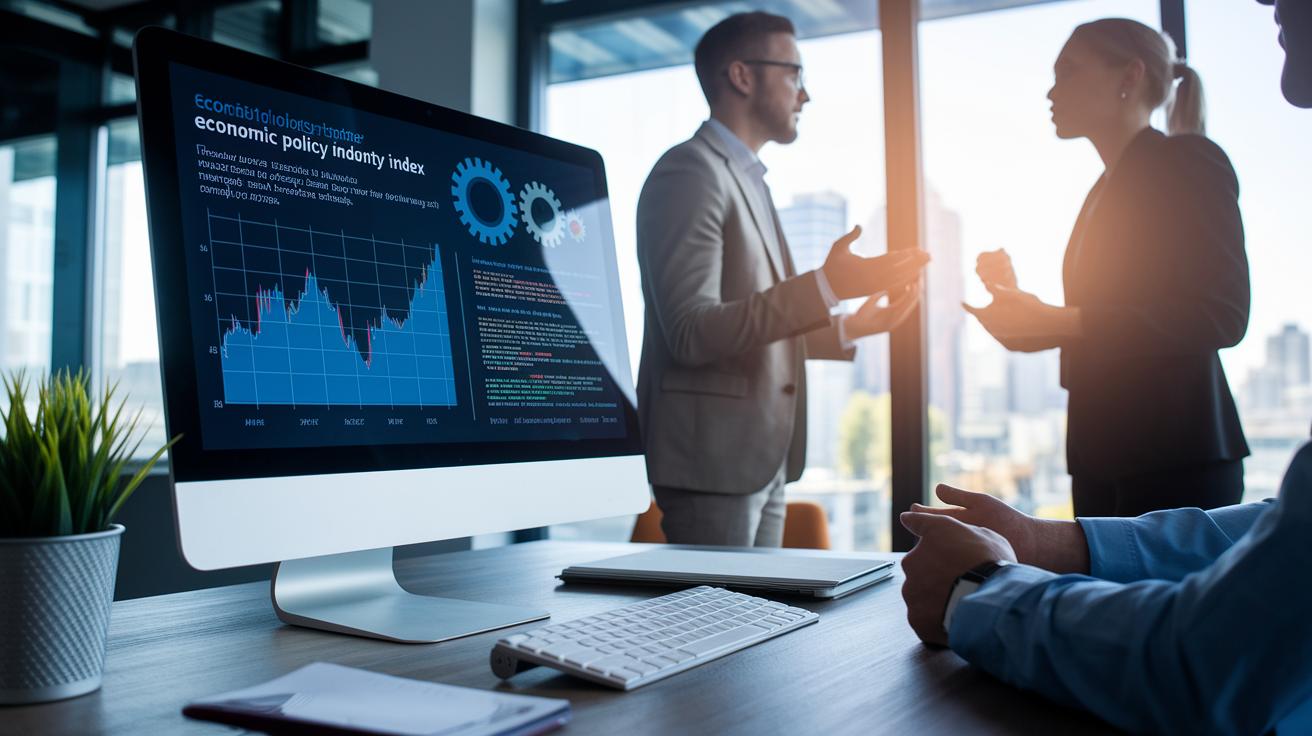
Investors, policymakers, and companies need to track the ups and downs in the economy. Experts use simple data like the Economic Policy Uncertainty index (a score that shows how unclear policies are) and the VIX (a measure of market jitters) to get a clear picture. They also rely on machine learning (tech that learns from data) to study fast-changing numbers. This lets them see quick shifts in rules, like tax rules ending in 2026, and plan for risks.
Econometric and Machine-Learning Models
Traditional models use past data and current market moods to measure uncertainty. They mix in news details and financial numbers to build a clear view. At the same time, machine learning goes through huge sets of information to spot new trends. One case even saw a big policy change a few days before it happened, giving investors a useful edge.
Scenario Planning and Stress Testing
Scenario planning builds different "what if" stories to prepare for varied policy moves. Stress tests, such as the Fed's June 2025 check that simulated a 30% fall in stock markets with a 5-point rise in unemployment, show where the system may break. A single test found that even small policy tweaks could unsettle major market areas and force a rethink of risk plans.
Together, these methods provide a strong toolkit. They help leaders make smart plans that balance risk while seizing new chances in uncertain times.
Strategies to Manage Economic Uncertainty: Risk Management and Adaptive Policies
Businesses are changing how they work to handle growing market instability. They now use several methods such as working with different suppliers, actively shifting their assets, keeping extra cash on hand, and using derivative contracts (financial tools for managing risk). For example, one large retailer expanded its list of suppliers across many regions. This move cut shipment delays by 40% and lowered the risk of relying on one source. These steps help companies adjust quickly when market conditions change and plan for tough times while also taking advantage of small recoveries.
Government policies are also changing to be stronger against economic shocks. In 2025, for example, governments and central banks introduced risk-based bank supervision. This new method helped 98% of major banks meet their cash needs during stress. One central bank put in place measures that acted like a safety valve, helping banks stay stable during heavy economic shocks. Policymakers are now setting up fiscal plans that offer short-term relief and support long-term improvements.
Investors are also shifting their strategies in uncertain times. Executives and fund managers are rebalancing their portfolios and using tools like derivatives and active asset allocation to manage risk. One investor said, "Smart investing means being ready for sudden changes. I once turned a downturn into a chance to win with a well-timed shift." These steps stress the importance of keeping cash reserves to stay liquid. By using solid risk management and quick planning, market players can handle fiscal pressures and be ready to benefit from any market upturn.
Final Words
In the action, this piece outlined economic uncertainty from its definition and origins to its real-world impacts. It broke down key metrics like the EPU and VIX, reviewed shocks from Brexit to the Ukraine war, and examined factors such as trade shifts and inflation swings.
The analysis also offered forecasts and risk management strategies for navigating volatile markets. Each section helps build a clearer picture of economic uncertainty and its effects. Stay informed and prepared for the challenges ahead.
FAQ
What is economic uncertainty?
Economic uncertainty means unpredictable shifts in markets due to policy changes, global events, or crises. It signals investors and businesses to prepare for volatility and adjust their strategies accordingly.
What are some examples of economic uncertainty?
Economic uncertainty examples include events like Brexit, the U.S. election, sudden trade disputes, and crises such as the COVID-19 pandemic that disrupt market stability and affect fiscal policies.
What is the economic uncertainty formula?
The economic uncertainty formula does not follow a fixed equation. Experts use various indices and metrics, such as news frequency and market volatility, to gauge uncertainty in economies.
What is an economic uncertainty index and how does the world economic uncertainty index work?
Economic uncertainty indices measure indicators like news mentions and market fluctuations. The world economic uncertainty index captures global events affecting confidence, offering a snapshot of potential risks.
What is economic policy uncertainty?
Economic policy uncertainty reflects unclear government actions on trade, tax, or spending issues. This uncertainty often causes businesses and investors to wait for more definitive policy signals.
What does economic uncertainty today and in 2025 indicate?
Economic uncertainty today signals ongoing instability from recent shocks, while projections for 2025 suggest persistent challenges driven by rising public debt and global disruptions.
What happens during periods of economic uncertainty?
During periods of economic uncertainty, markets experience increased volatility, investors rebalance portfolios, and businesses may slow spending as they adjust to unpredictable economic conditions.