

Have you ever wondered how one small part can make your door much safer? The security strike sets the latch bolt in place and helps block break-ins. This guide shows how strikes and latch guards work as a team to build a strong barrier. We explain the benefits of adjustable and heavy-duty options and how fast, solid hardware can protect homes and businesses. Quick and smart door security starts here, a simple strike can boost your overall safety.
Understanding What a Security Strike Is
A security strike is a key door part. It guides the latch bolt into its proper spot in the frame and helps keep the door secure against forced entry.
This term also covers latch guards that protect the bolt area and strengthen the entire door setup. One popular example is the Security Strike (SKU: 1016-PB), which works alongside adjustable strikes and T-Strike variants to meet various installation needs.
- Adjustable strikes (SKUs 1047, 1050) help align the latch for a secure fit.
- T-Strike variants (SKUs 1041, 1041-SN) are made for narrow openings often seen in commercial settings.
- Heavy-duty latch guards (SKUs 1085, 1089, 1090) wrap around the latch bolt to offer extra strength.
Choosing the right hardware boosts security for homes and businesses. Each option is designed for specific door types and usage, making installation simpler while strengthening your door against break-ins.
Strike Security Fundamentals Explained

Security strikes use top-grade materials that give strength and long life. Many systems use stainless steel, like those in ASA commercial strikes, to form a strong strike plate. This strike plate can stand up to heavy use and repeated impacts. The mix of metals and composites helps the system resist force while keeping the door bolt secure. This design also strengthens the door frame against kick-in attacks.
Another key aspect is the bolt engagement depth and the screw anchoring method. A quality strike plate lets the bolt slide deep into the frame, lowering the risk of forced entry. A secure door bolt setup needs the proper pilot holes and sturdy screws to hold the plate firmly. Focusing on bolt depth along with strong anchoring stops the plate from shifting during impacts.
The final element is the alignment with the locking cylinder. When the strike plate lines up with the cylinder's catch, the door becomes tougher to break into. Heavy-duty latch guards, such as those with SKUs 1089 and 1090, wrap around the latch bolt to add extra resistance and help keep the door closed securely.
Common Types of Security Strike Plates and Installation Contexts
Adjustable strikes work well in many wood homes. They need exact measurements of the door jamb because even a small error of more than 1/16 inch can make the latch stick. For example, a homeowner installing an adjustable strike must measure the door frame carefully. A small mistake may make the latch bind, which affects both how it works and safety. Remember the saying, "measure twice, cut once" to avoid expensive fixes later.
Full-lip strikes (SKUs 1063–1066) give a neat, flush look by covering the whole jamb face. In contrast, T-model strikes (SKU 1041) are made for metal commercial frames. They are designed for narrow openings where traditional hardware might not fit well. These strikes are perfect for retrofit jobs when keeping the original look is important.
The style of the strike plate must match the door frame type for proper installation. Wood doors need adjustable strikes with careful measuring, while metal frames require T-model strikes for a secure fit. Full-lip strikes work when a clean, flush finish is desired. They are a great choice for both new installations and retrofits in different settings.
Electronic Security Strike Systems and Integration

Electronic strike systems use a solenoid or motor to open a door instead of a traditional mechanical latch. When power is applied, the solenoid or motor releases the latch. This design lets you control door access remotely or from a connected panel in real time. They need proper wiring and a reliable power supply to work correctly. Many everyday systems work on 12–24 VDC, while some commercial models use 100–240 VAC to handle more demanding settings.
The wiring for these locks is simple but must be precise. A low-voltage circuit powers the solenoid to open the latch when activated. This setup integrates smoothly with modern access-control panels so that only authorized users gain entry while intruders remain blocked. When problems arise, technicians usually check the wiring connections and verify that the correct voltage is present at key points.
Home kits for electronic strike systems often include mounting adapters that fit common mortise or cylindrical locks. They are designed for quick installation and easy use in residential settings. In contrast, commercial models usually have a wider range of electrical options and a more robust design to support high traffic and strict security needs. This clear difference helps users pick the right system for their specific environment.
Step-by-Step Security Strike Plate Installation Guide
-
Gather your tools. Before you begin, have chisels, a drill with #8 drill bits, a tape measure, a level, a pencil, and 3-inch screws on hand.
-
Measure the door jamb setback. Use your tape measure to mark a 1 ⅜-inch gap from the door edge to the frame. This helps the strike plate line up with the latch bolt.
-
Mark the strike plate position. With a pencil, draw a mark on the door jamb where the plate will sit. This step sets up the correct alignment.
-
Outline the mortise area. Draw the border of the strike plate on the jamb. This outline guides you in cutting the mortise accurately.
-
Chisel the mortise. Use your chisel to remove material and create a 1/8-inch deep mortise along the marked area. Remove only what is needed for a snug strike plate fit.
-
Drill pilot holes. At the indicated screw spots, drill pilot holes with your #8 bit. This stops the wood from splitting when you add screws.
-
Fit the strike plate. Place the strike plate in the mortise and compare its position with the door frame. Make sure the latch bolt hole aligns with the door strike surface.
-
Partially secure the plate. Insert the 3-inch screws and tighten them just enough to hold the plate in place while you make final adjustments.
-
Check the latch. Gently test the latch bolt against the strike plate. Mark any spots where it rubs too much so you can make corrections.
-
Finish tightening and test. Fully tighten all screws with steady, moderate force. Test the door repeatedly to ensure the latch moves smoothly without sticking.
Maintenance and Troubleshooting for Security Strikes
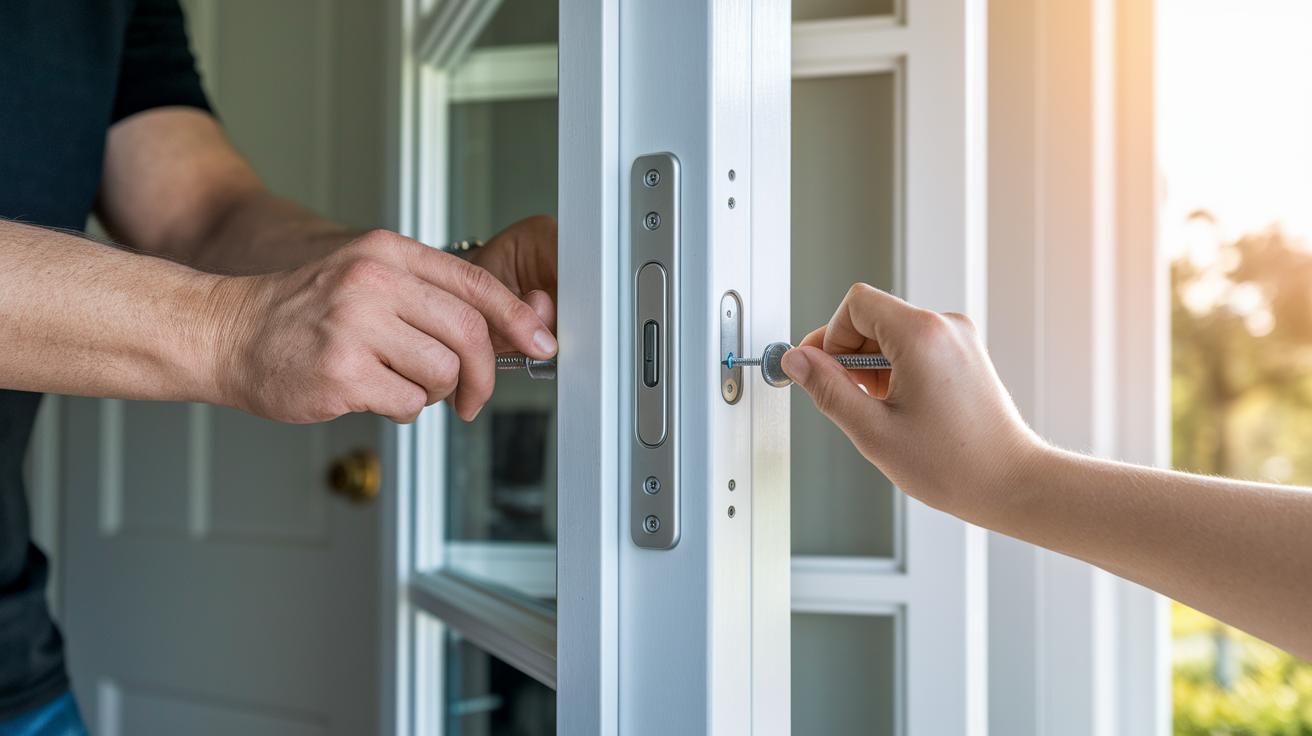
Keep your door secure by taking care of both mechanical and electronic strike systems. Regular checks catch small issues before they become big problems. This routine care helps prevent misalignment, latch jams, and wear that could weaken your hardware.
- Check and tighten screws regularly so the frame stays fixed.
- Make sure the latch and strike plate line up to avoid sticking.
- Look over wiring terminals for loose connections that could cause failures.
- Follow a lubrication routine: use graphite or silicone spray on metal parts every six months.
- Test the solenoid to ensure it gets enough voltage and responds correctly.
- Replace worn plates as soon as you see damage or ongoing issues.
These simple tasks keep your security strike systems running smoothly. By addressing problems early, you secure your door and extend the life of your hardware while protecting against break-ins.
Security Strike: Bold, Swift Action
Choosing the right strike plate is key to keeping doors secure. You need to look at material hardness, screw length, and the door frame type. Grade 1 hardened-steel plates that score above 45 on the Rockwell C scale give you the strength to stop forced entry. These plates work best when paired with screws that hold firmly in the frame. A plate that matches your door's design and the correct screw length creates a tight, dependable fit. Schlage adaptive plate systems offer a slim design and extra backing while keeping a modern look.
Finish options and standard rules also play a role. A secure locking plate must look good and work well. Jamb adaptor kits and spacer rings fix door frame gaps of up to 0.75 inch without changing the door jamb size. This makes installation smooth even in tricky setups. In short, matching the right materials and screws with proper frame alignment gives you the fast, strong action your home or business needs.
Final Words
In the action, we broke down what a security strike is and its role in door-frame protection. We reviewed the different strike plate types, from adjustable and full-lip to T-strike, and examined installation, electronic integration, and upkeep details.
We outlined practical steps and troubleshooting methods that support strong and reliable door security. With clear insights and hands-on guidance, this piece serves as a quick, actionable resource to help you choose and maintain a robust security strike. Enjoy applying these solid tips to enhance your door safety.


